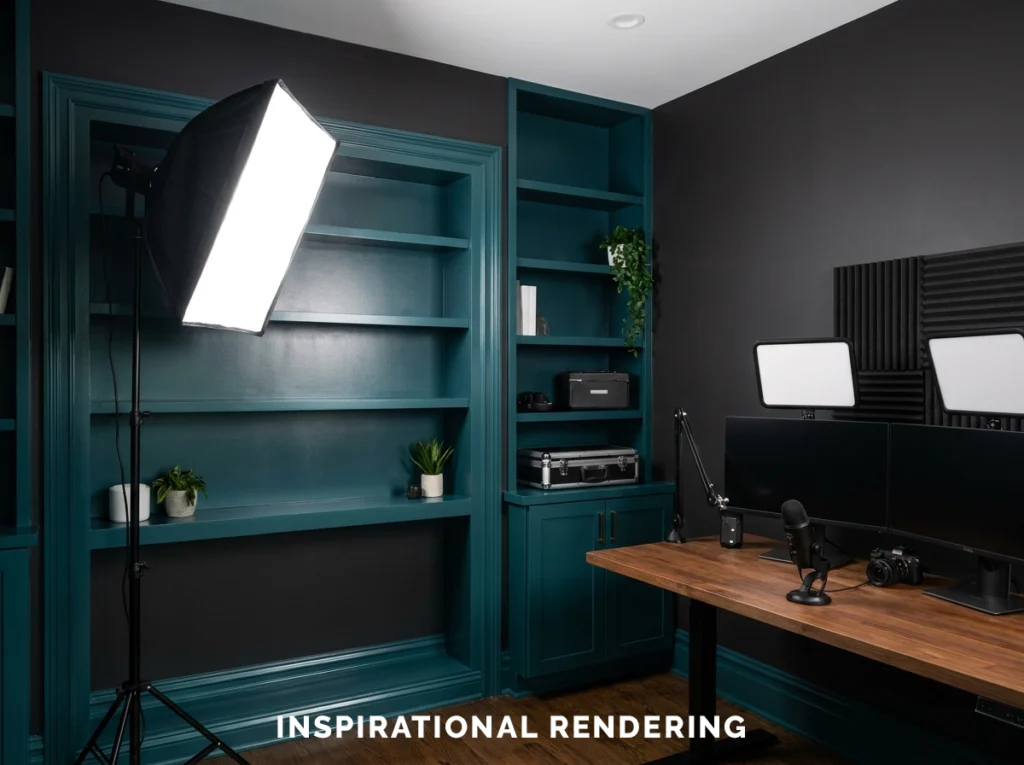
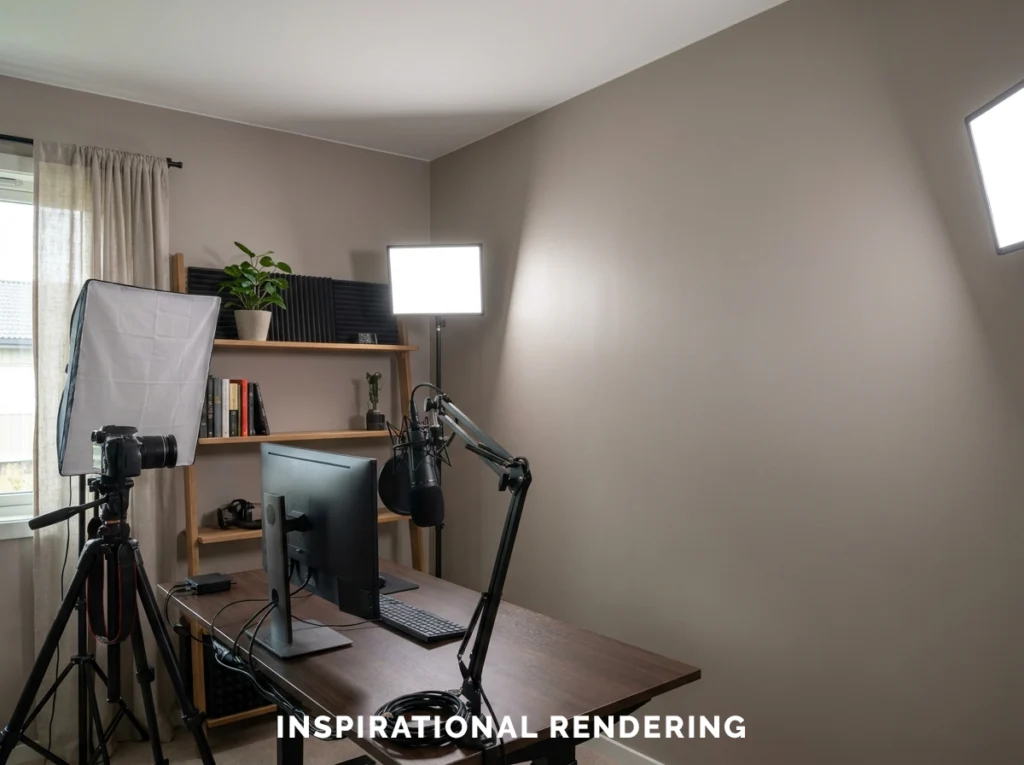
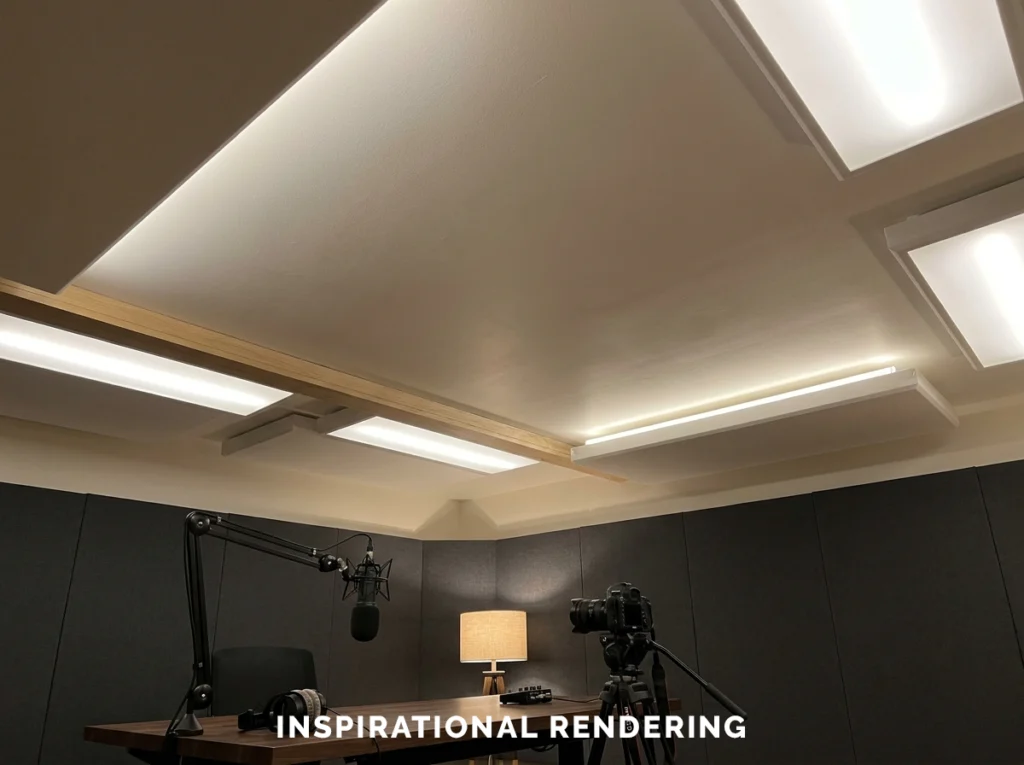
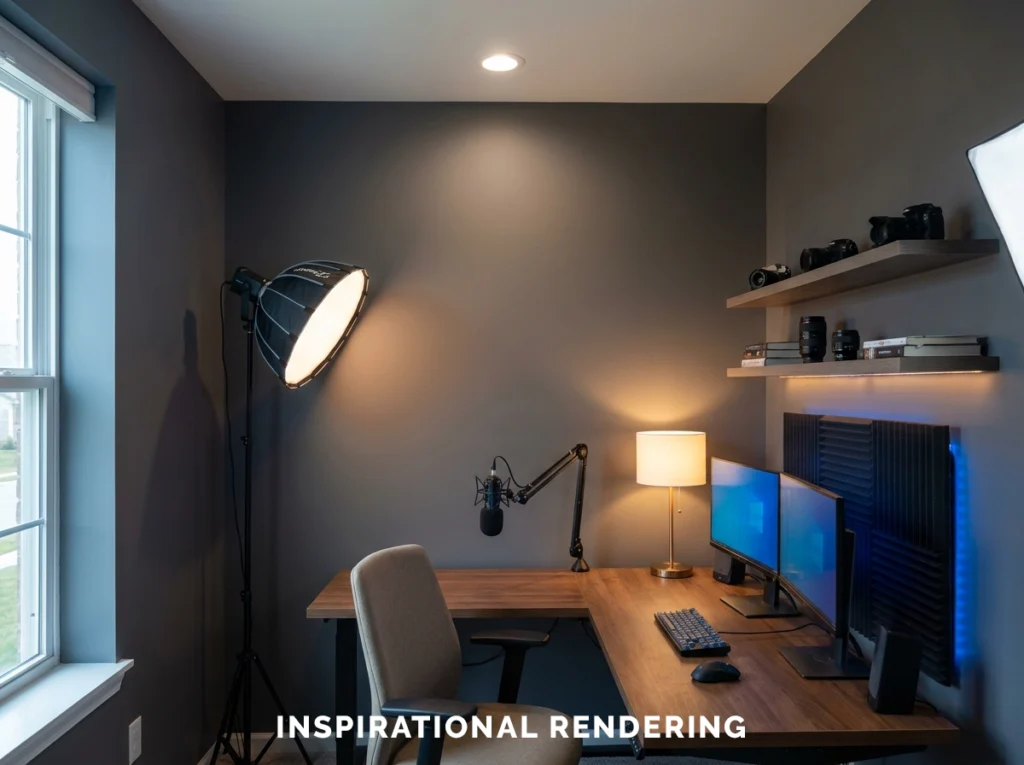
Plan a studio around the camera first, deciding which wall is the background and where your lights will go before you pick colors.
Keep permanent surfaces neutral or subdued, such as charcoal, navy, sage, gray, or off-white, and bring in stronger color with lighting, furniture, and decor.
Dark rooms give more control and suit RGB or cinematic setups but need deliberate lighting, while light rooms feel open and natural on camera.
Use low-sheen finishes like matte or eggshell on camera walls and flat on ceilings to avoid hot spots and reflections from studio lights.
A streaming room, podcast studio, or content creation space needs to do more than look good in person. The colors, finishes, lighting, furniture, and decor all become part of what viewers see on camera.
A great studio design should create separation between you and the background, give you control over lighting, reduce distracting reflections, and still feel comfortable when the cameras are off.
For most content creation spaces, the best approach is to keep permanent surfaces relatively neutral or subdued and use lighting, furniture, artwork, acoustic treatments, and decor to introduce stronger colors.
These Streaming Room and Podcast Studio Color Ideas cover paint colors, lighting, decor, acoustic treatments, flooring, and other elements that help create a camera-ready space. If your studio is also used as a home office, you may also want to read our guide to the best paint colors for home offices.
Before I paint a studio, I ask the client to set the camera on its tripod and frame a normal shot. Then I mark the edges of that frame on the wall with painter’s tape. That shows exactly which surfaces need the most care, where patches or nail holes must be perfect, and where a feature color will actually be seen.
Painting Pro Tip
For a painted green screen wall, surface prep matters as much as the paint. Any roller marks, patches, or texture changes create shadows that make keying harder. I recommend a smooth, well-sanded wall, a matte finish, and even coats rolled in one direction, then lighting the wall separately from the person in front of it.
Need Help Choosing Paint Colors?
Qualifying MGM Painting Co. projects include a free professional color consultation through our partnership with Guiry’s Color Source. Our customers can meet one-on-one with a professional designer who can help compare wall colors and coordinate paint with lighting, flooring, furniture, acoustic treatments, and other features in a streaming room, podcast studio, or content creation space.
This can make choosing a studio color scheme much easier, especially when you need the room to look good in person, under artificial lighting, and on camera.
Painting Pro Tip
I always tell creators to test samples with their own key light and background lights on, set the way they film. Studio lights are much brighter and closer to the wall than room lights, so a sheen that looks flat in person can show a shiny hot spot on camera. A matte or eggshell background wall avoids most of that.
Designing a Content Creation Space Around the Camera
Before choosing paint colors, decide where your camera will normally be positioned. Stand where the camera will be positioned and look at the room from that perspective.
Which wall will form the primary background?
How much of the ceiling will appear in wider shots?
Will shelves, acoustic panels, artwork, or furniture appear behind you?
Where will your key light and background lights be positioned?
Will natural light enter through a window?
Do you want the room to feel bright and natural or dark and cinematic?
Design the room around the camera angle first. Then build the color palette around what will actually appear in the frame.
Dark vs. Light Content Creation Rooms
Both dark and light color schemes can work well for content creation. They simply produce different results.
Dark Studios
Charcoal, black, navy, and other deep colors give you greater control over the visual environment.
Gaming streams
Technology channels
Automotive content
Music studios
Cinematic interviews
Podcast studios
RGB lighting setups
The tradeoff is that dark rooms need intentional lighting. Without enough light or contrast, a black desk, black chair, dark clothing, and charcoal wall can visually blend together.
Dark surfaces reflect less light around the room, making it easier to keep attention on the person or product being filmed.
Light Studios
Cream, off-white, light greige, sage, and other lighter colors create a more open and natural appearance.
Lighter walls reflect more light around the room, which can create a softer overall appearance. However, they also give you less control over dramatic lighting because light from your fixtures can bounce off nearby walls and ceilings.
Best Color Schemes for Content Creation Rooms
There is no single color palette that works for every creator. Your ideal combination depends on what you create, how you light your videos, your furniture, your branding, and whether the room has other uses.
These are some of the most versatile combinations.
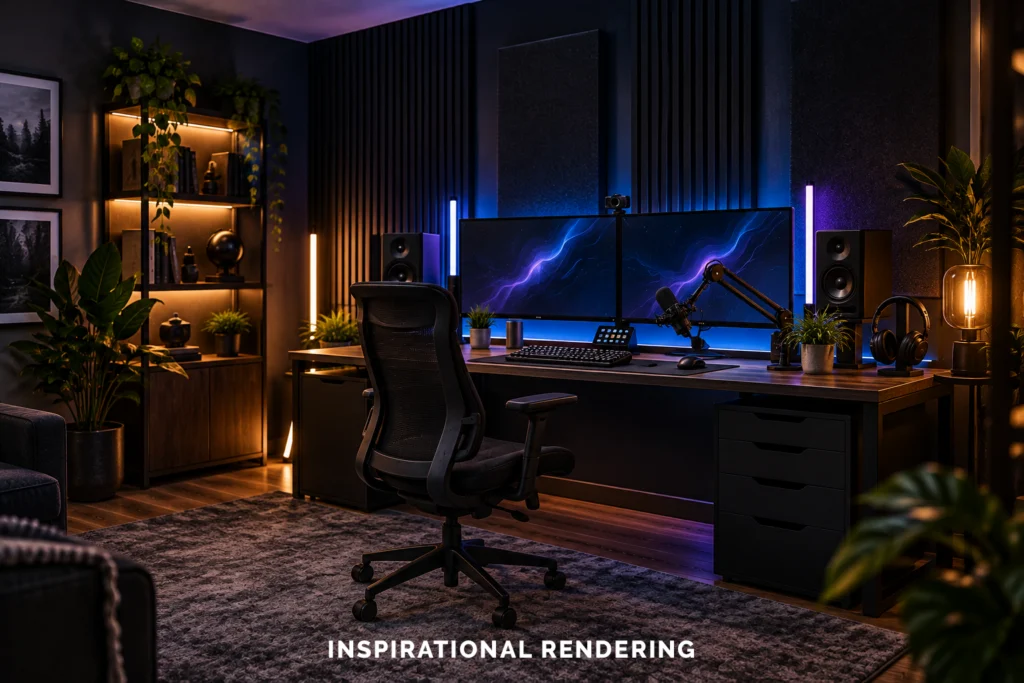
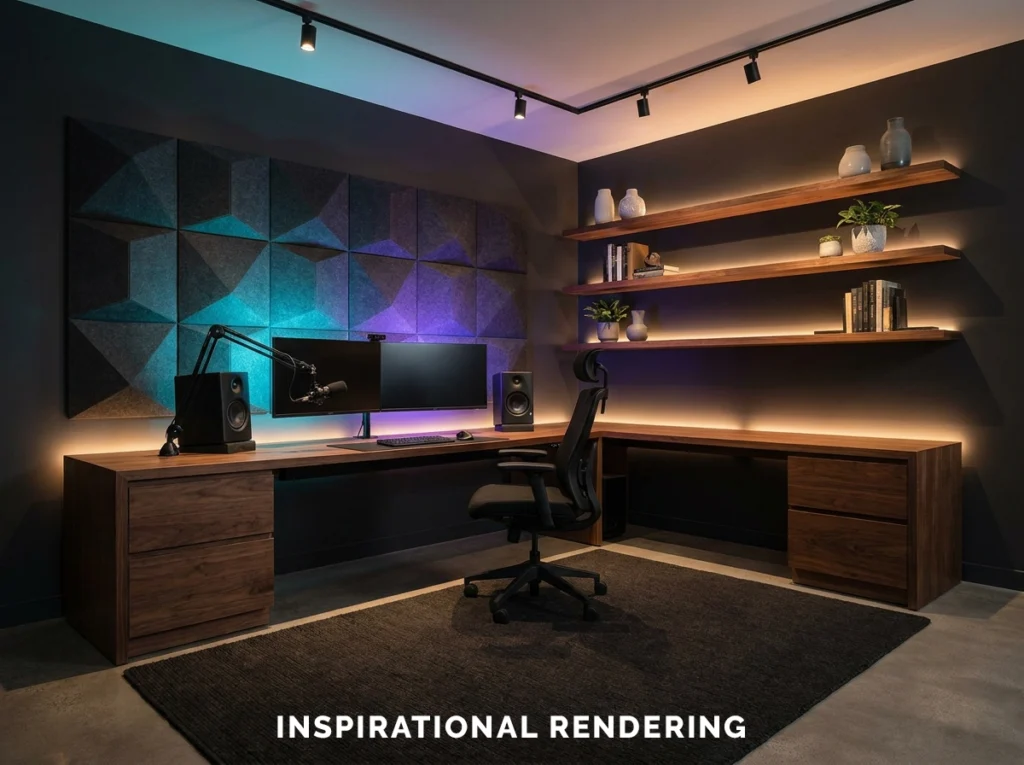
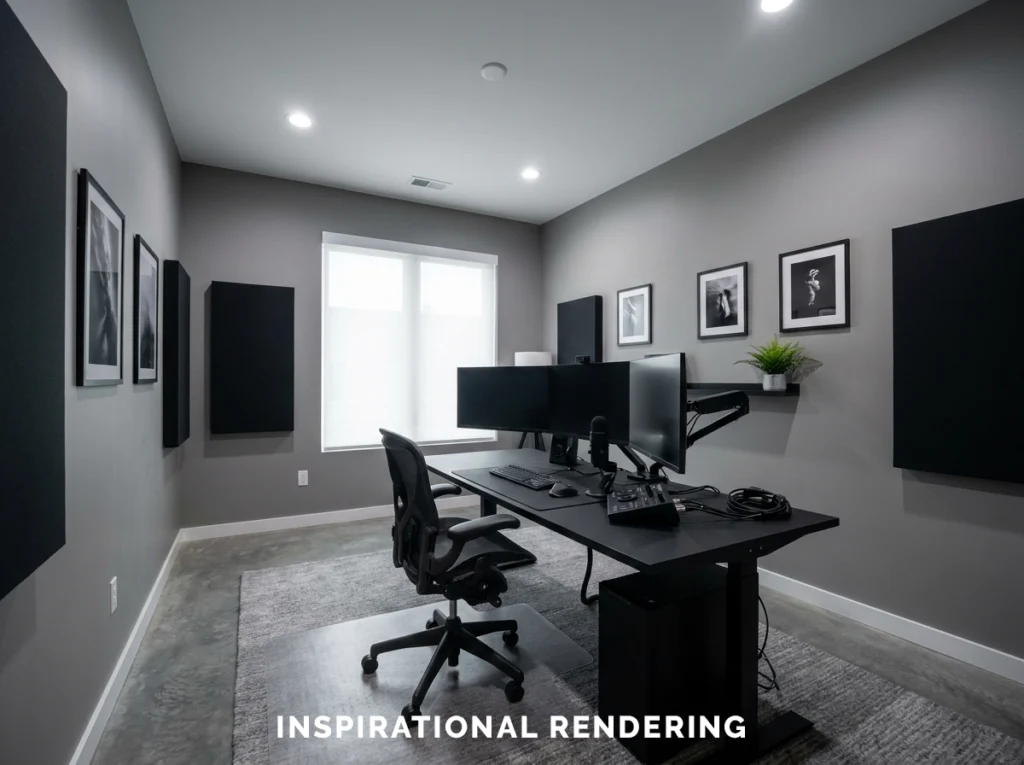
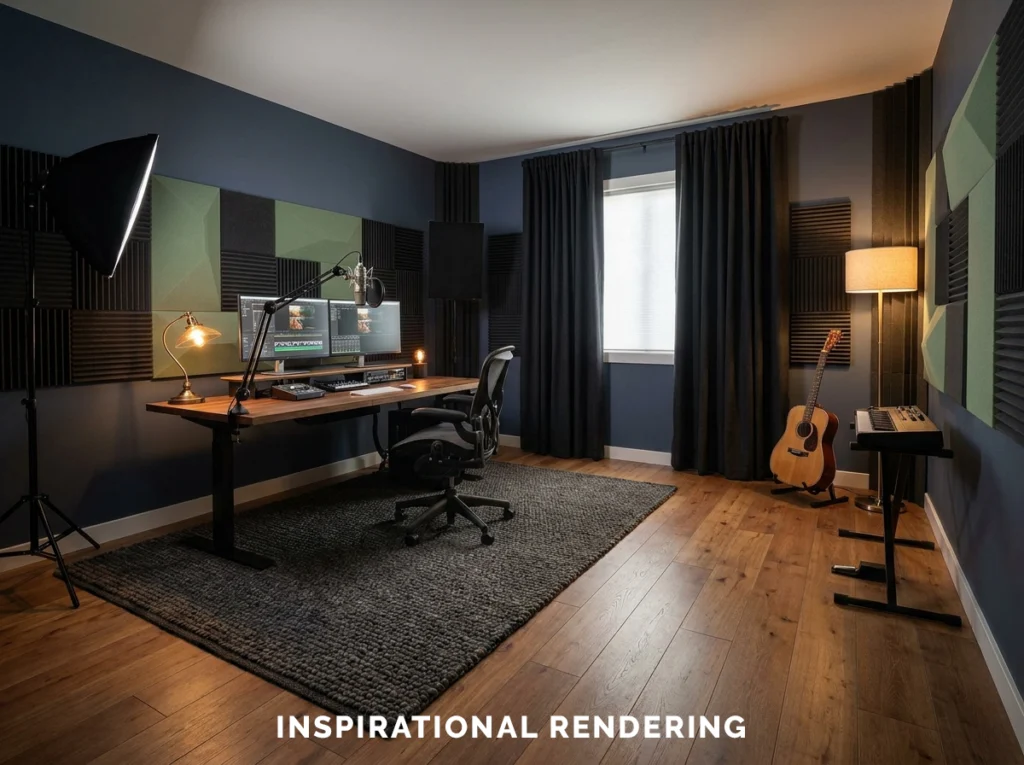
Charcoal, Wood, and RGB Lighting
Instead of permanently committing the room to blue, purple, or another saturated color, charcoal gives you a neutral surface that can change appearance depending on your lighting.
To create this combination use:
Walnut or medium-tone wood
Matte black furniture
Dark gray acoustic panels
Simple floating shelves
Cyan, purple, blue, or amber accent lighting
The paint establishes the room. The lighting establishes the mood of the room and ultimately the content you are creating..
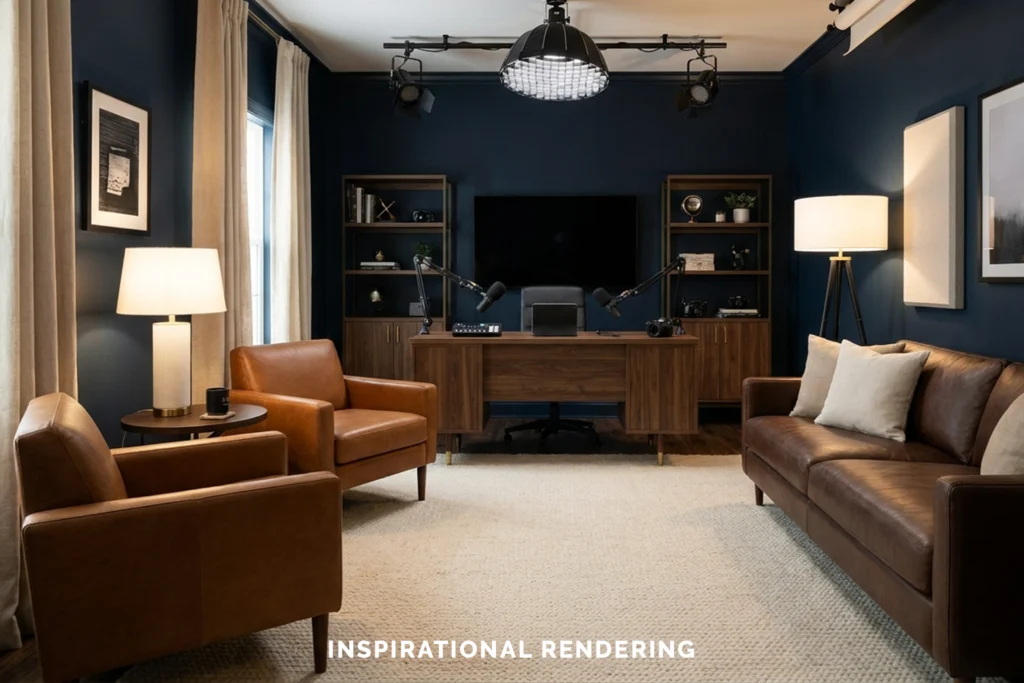
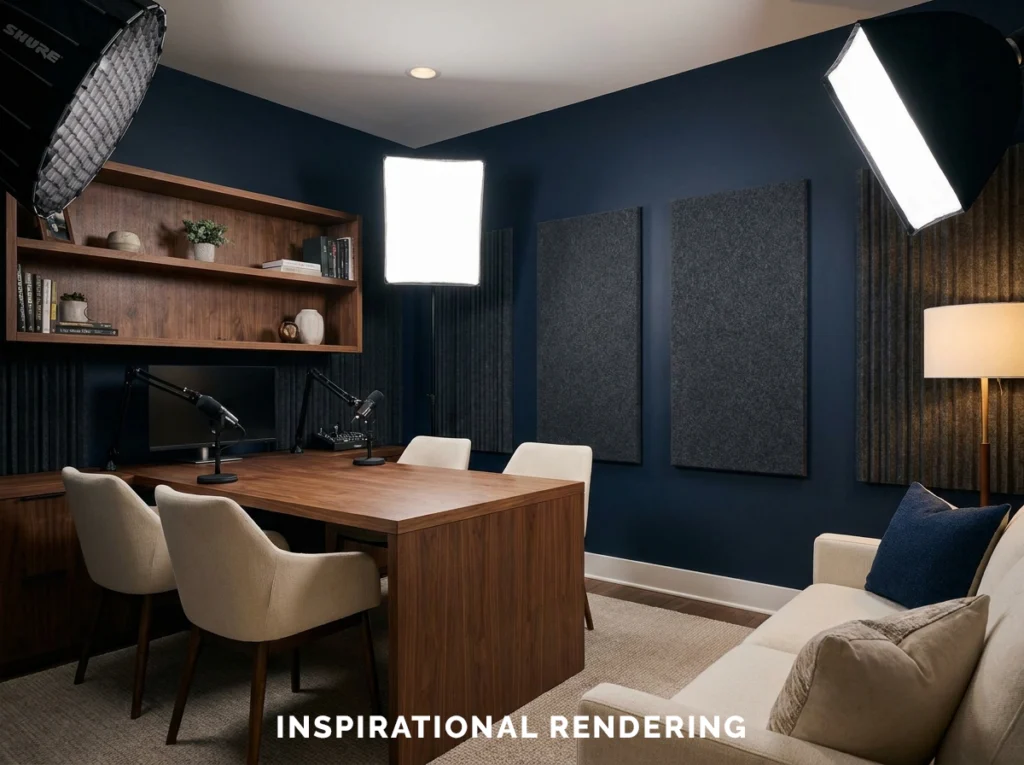
Navy, Walnut, and Warm White
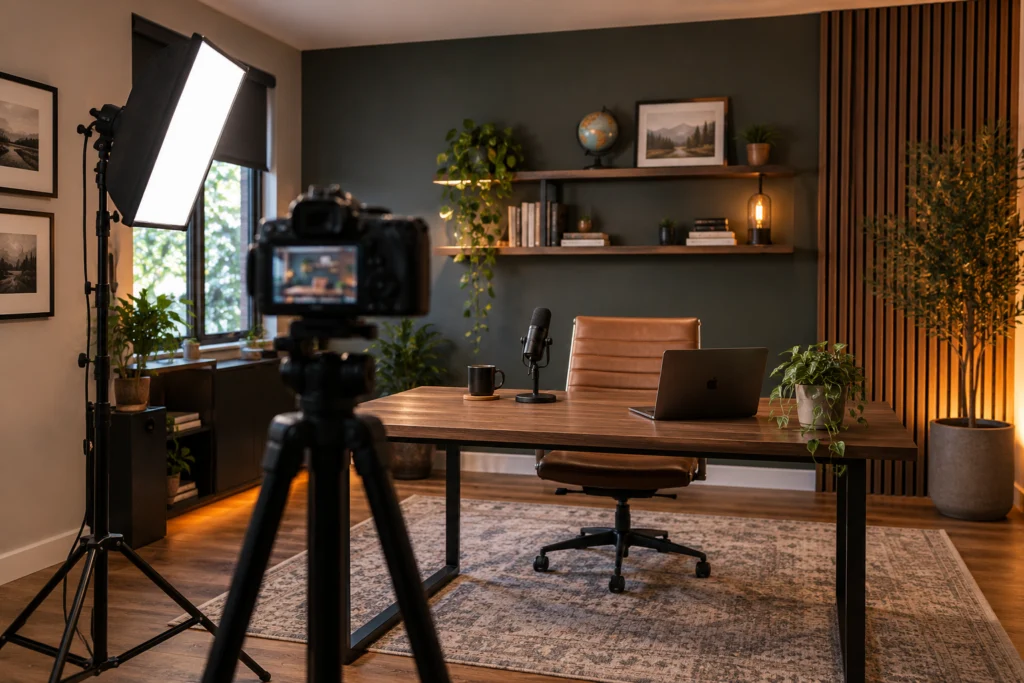
Deep navy is one of our favorite choices for podcast studios and professional content creation spaces. It adds more color than charcoal without becoming overly bright on camera.
To create this combination use:
Walnut desks and shelving
Cognac or brown leather
Warm white lamps
Black microphones and equipment
Brass or dark metal accents
Cream or beige textiles
A navy background also gives lighter furniture, artwork, and skin tones plenty of contrast.
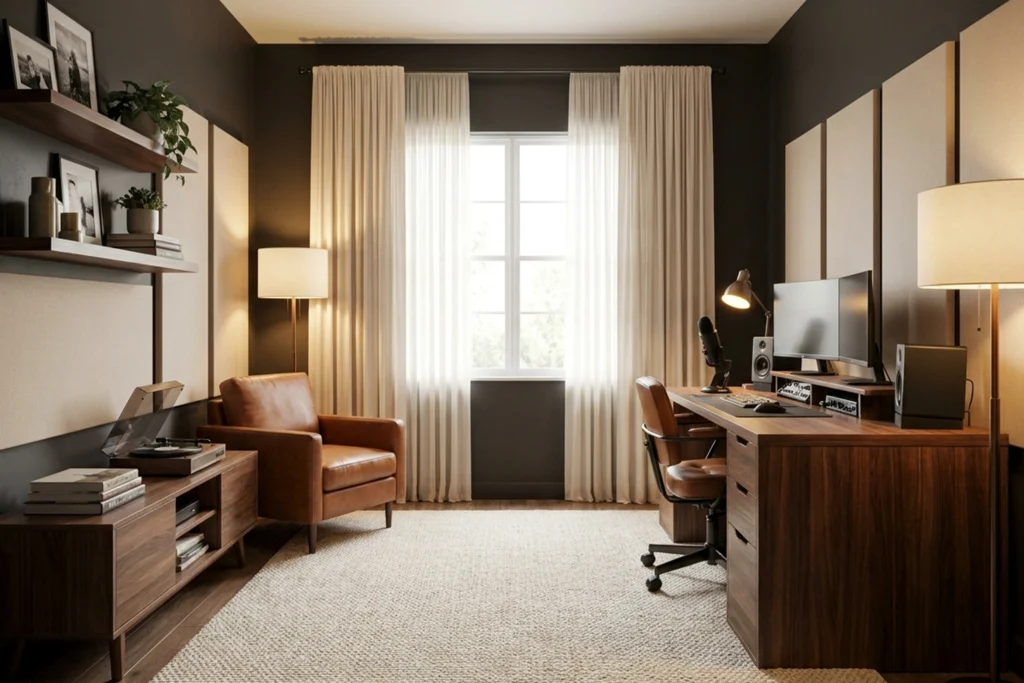
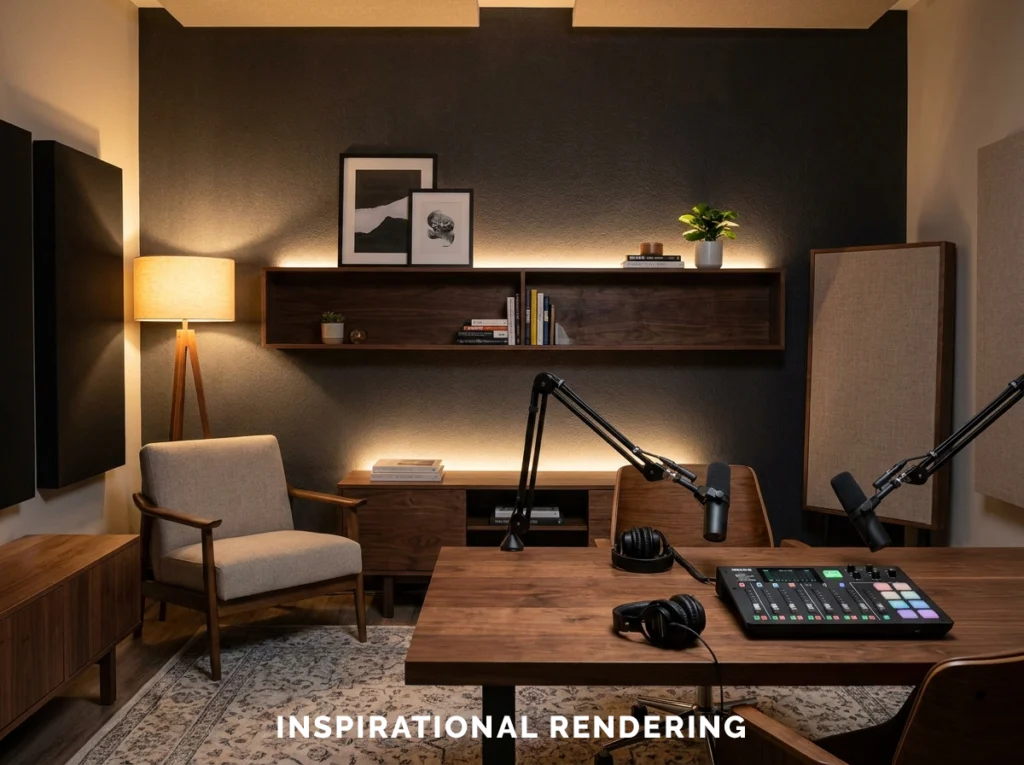
Charcoal, Cognac, and Cream
For a professional studio that should still feel residential, try warm charcoal with brown leather, warm wood, and cream.
This combination works especially well when a podcast room doubles as an office or sitting room.
To create this combination use:
Warm charcoal walls
Cognac leather chairs
Walnut shelves
Cream curtains
Soft beige or oatmeal acoustic panels
Warm lamps
Muted green plants
This is also a good alternative for homeowners who like the cinematic look of a black studio but do not want the entire room painted black.
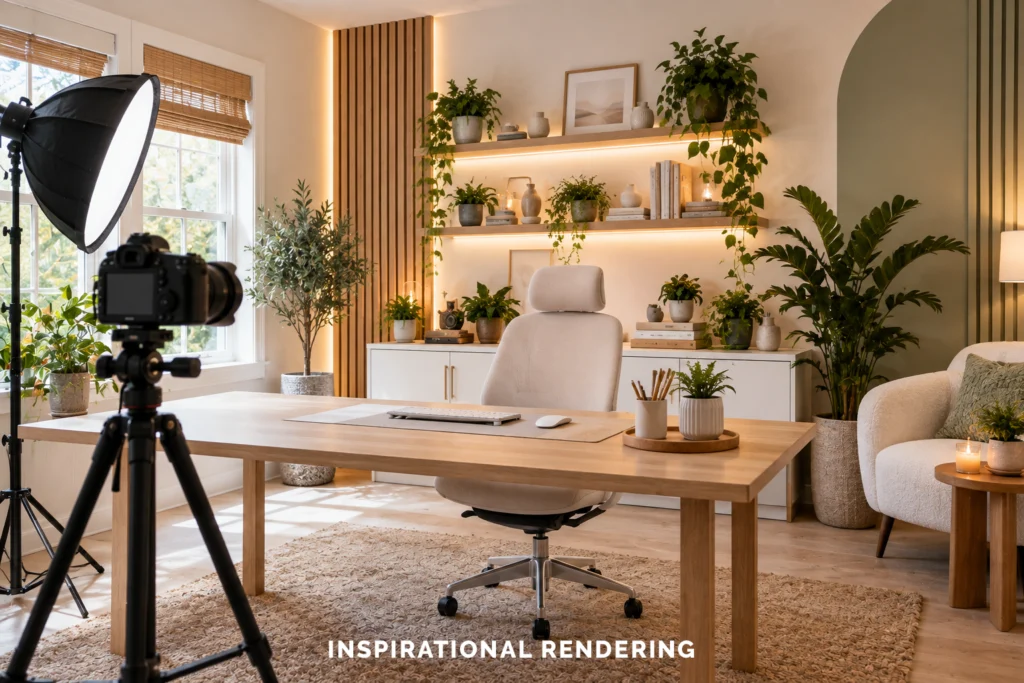
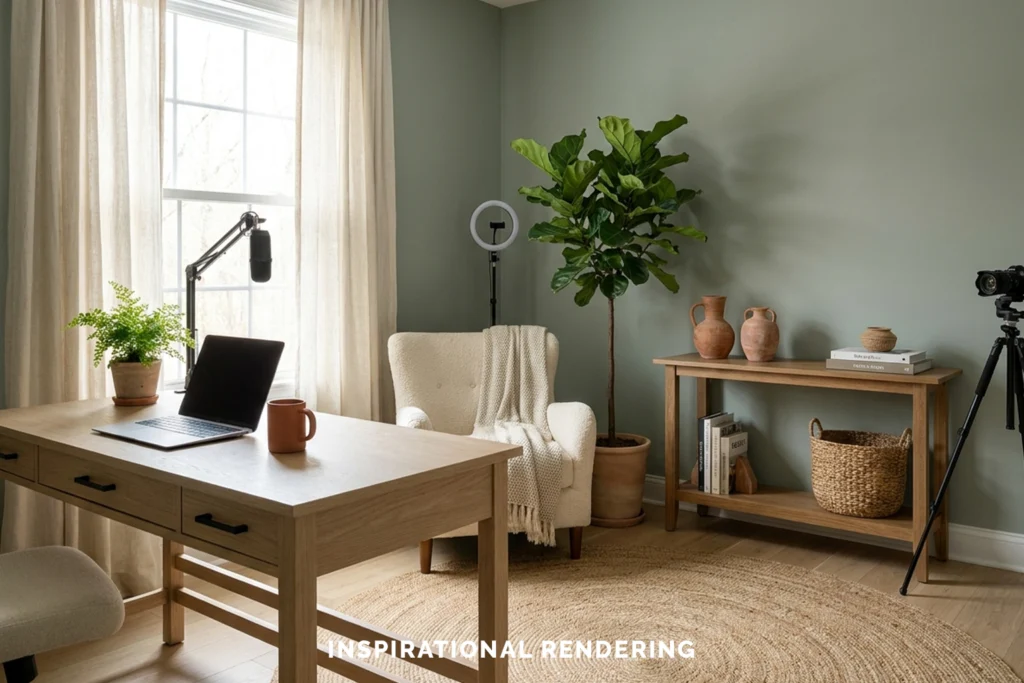
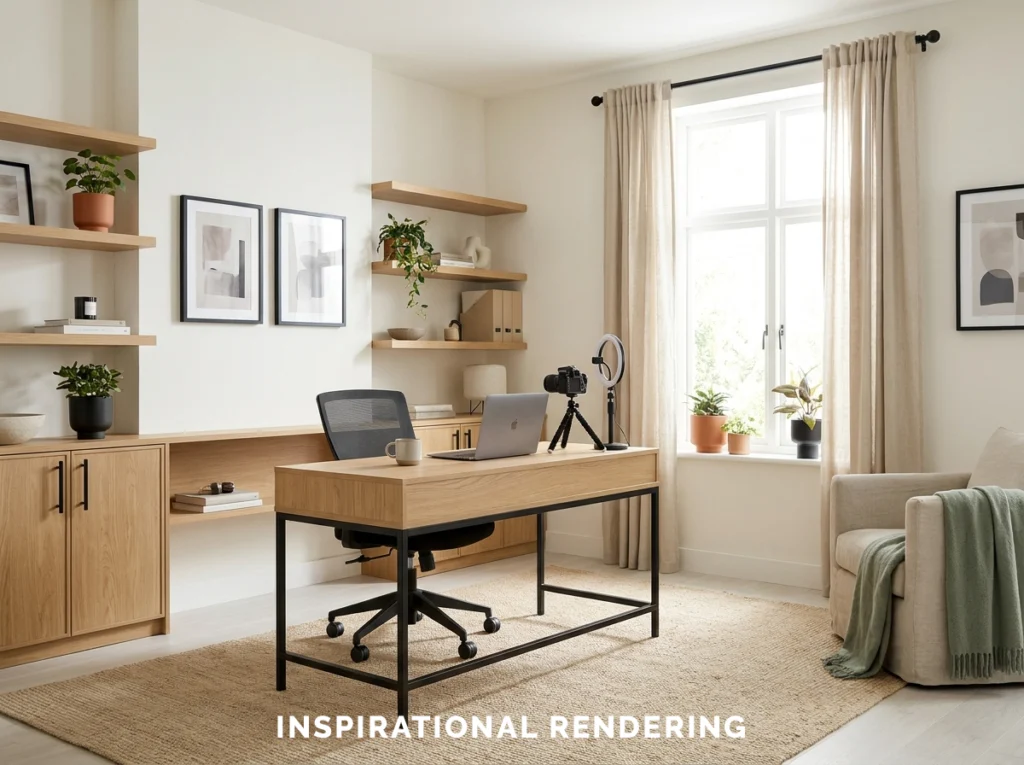
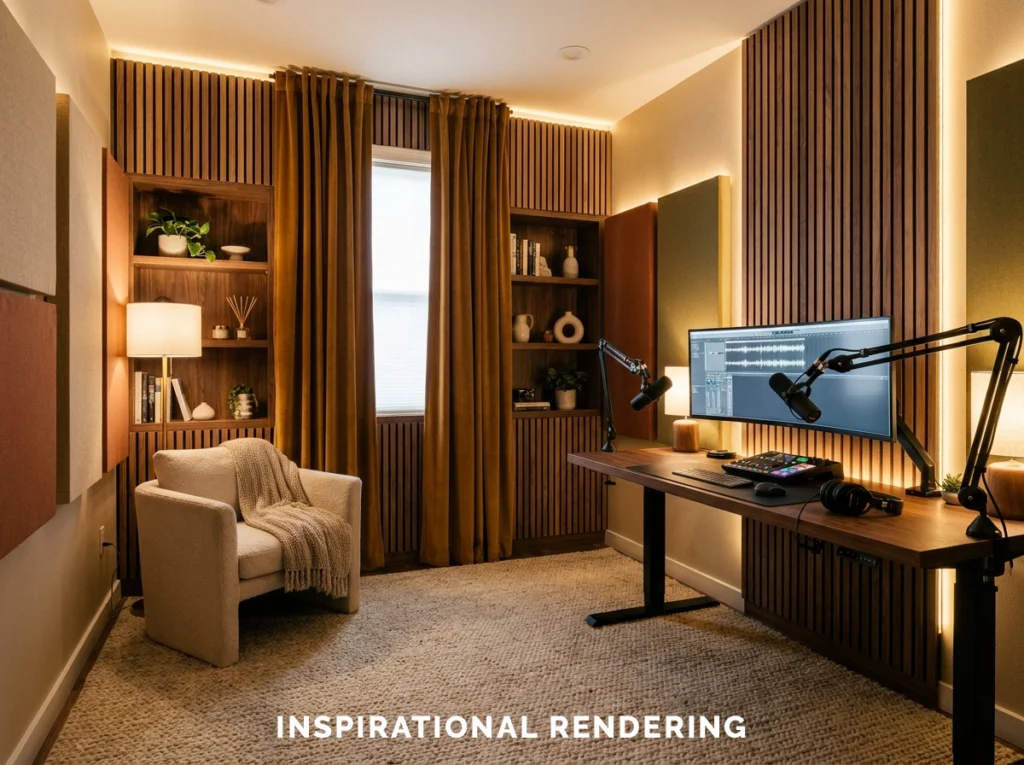
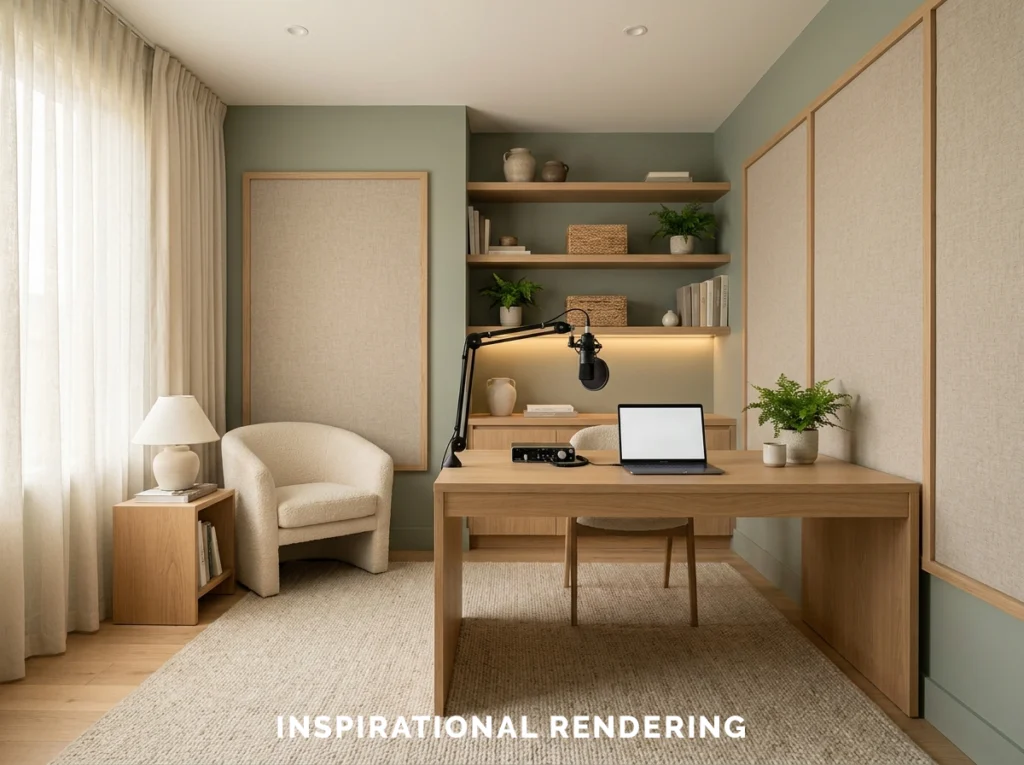
Muted Sage, Oak, and Cream
Not every content creation room needs to look like a traditional recording studio.
Muted greens can create a softer background that works especially well for lifestyle, wellness, educational, beauty, food, and home-related content.
To create this combination use:
White oak
Cream upholstery
Linen curtains
Black hardware
Natural fiber rugs
Terracotta or clay accents
Plants
The key is keeping the green subdued. Extremely saturated green can dominate the image. A muted green provides color while allowing the subject and decor to remain the focus.
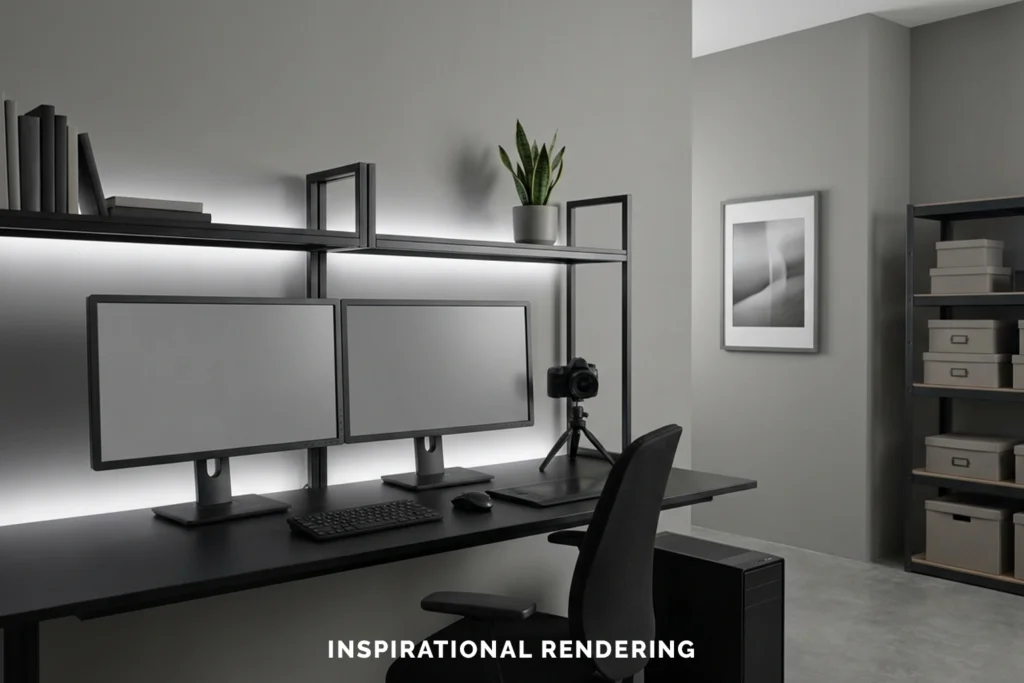
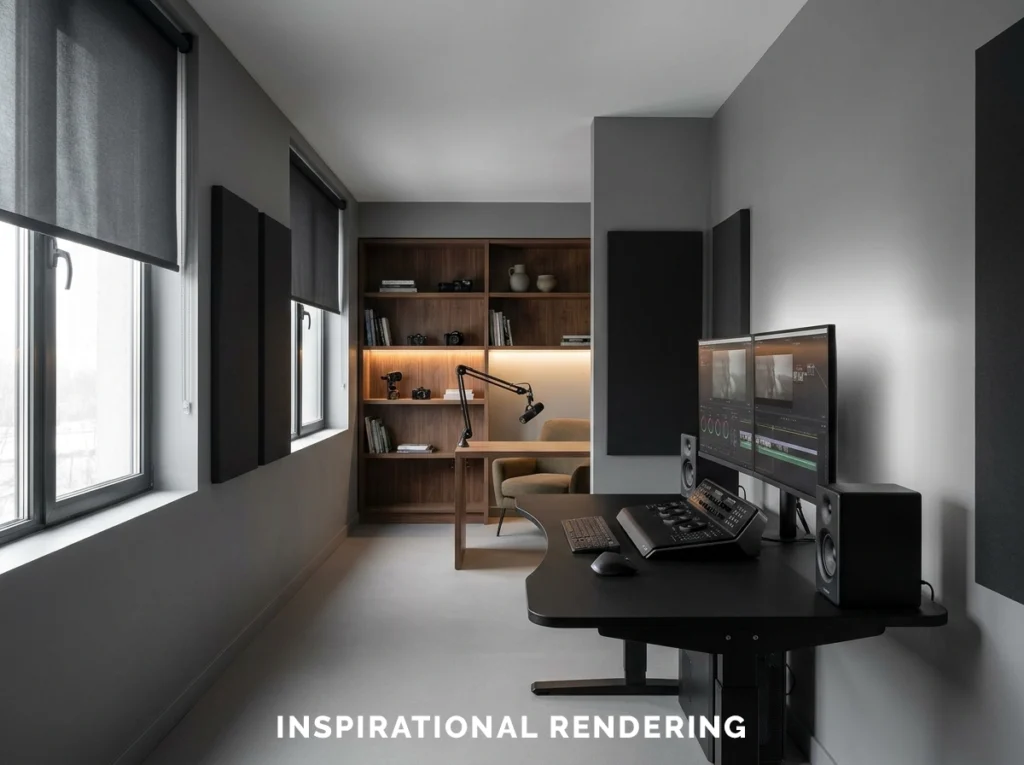
Neutral Gray, Black, and White
Neutral gray is particularly useful for rooms where accurate color matters. Photographers, video editors, designers, and other creators often benefit from limiting strong surrounding colors near their monitors.
To create this combination use:
Neutral gray walls
Black desk
Dark monitor surrounds
Minimal colored decor near the workstation
Controlled neutral lighting
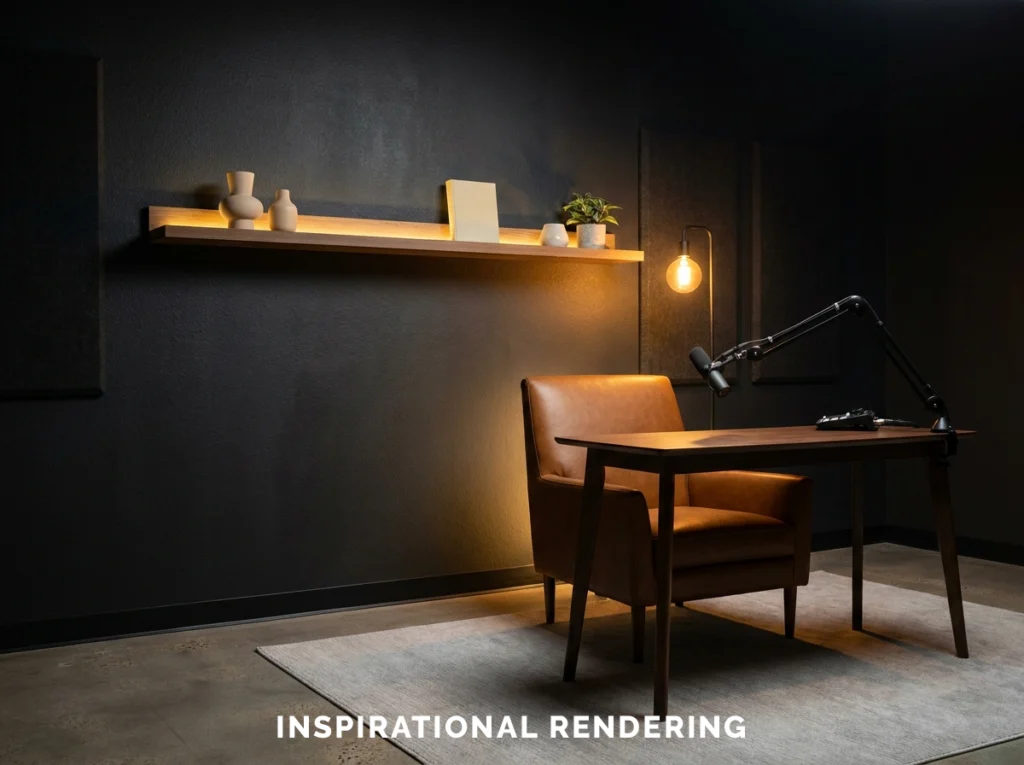
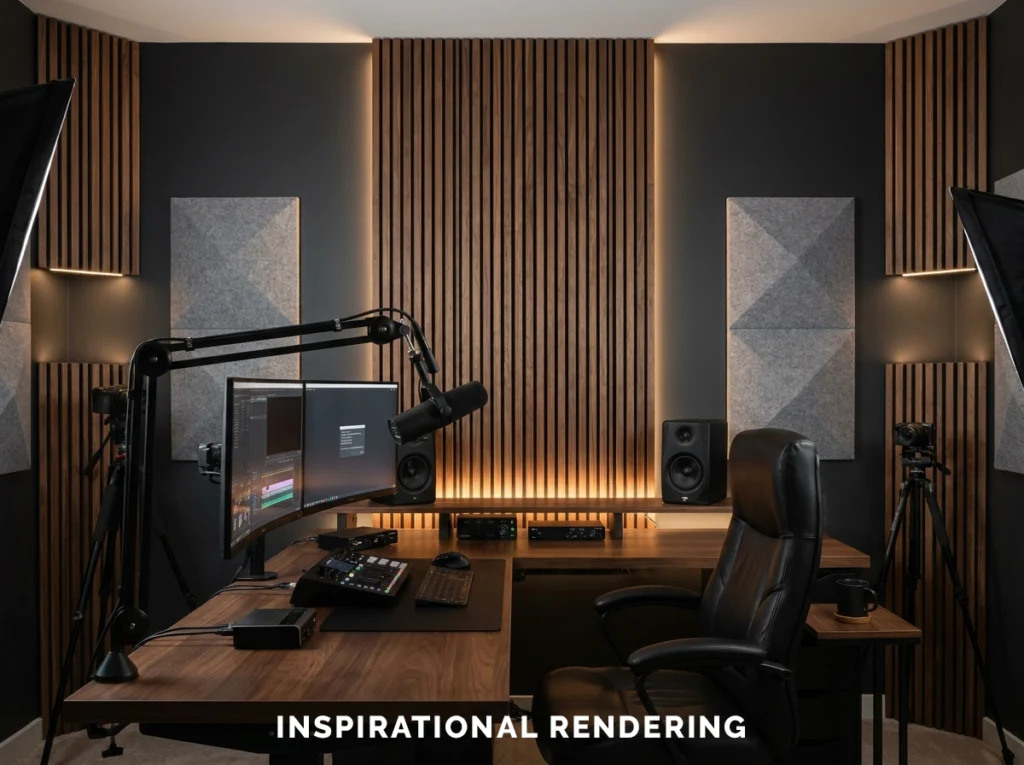
Black, Wood, and Amber Lighting
Black walls can create an impressive podcast or video studio when the room has enough lighting and texture.
To create this combination use:
Walnut acoustic slats
Warm wood furniture
Brown leather
Amber lighting
Dark green plants
Gray acoustic panels
Off-White, Light Oak, and Black
For bright content, an off-white room can be an excellent choice.
It is particularly effective for beauty, cooking, family, craft, product, fashion, and educational content.
To create this combination use:
Light oak furniture
Black hardware
Beige or linen textiles
Muted artwork
Simple plants
One controlled accent color
Very bright walls can create a lot of reflected light when you begin adding powerful studio fixtures. An off-white retains the clean look while feeling softer and more residential.
Choosing the Right Paint Finish for a Streaming or Podcast Studio
Color is only part of the decision. Paint sheen can make a major difference when you begin pointing studio lights toward the walls. A glossy surface is more likely to create visible reflections and hotspots. For that reason, we generally recommend keeping the primary camera-facing walls relatively low in sheen.
Matte
Matte is an excellent option for feature walls and camera backgrounds. It produces very little reflection and gives dark colors a rich appearance.
Satin
Satin can work well on doors, trim, cabinets, and other surfaces that need additional durability. However, be aware of where studio lights are positioned because satin surfaces can create more noticeable reflections.
Eggshell
Eggshell is a practical choice for many residential creator rooms. It provides a low sheen while offering more durability and cleanability than a traditional flat finish.
Flat
Flat paint works particularly well on ceilings because it reduces overhead reflections and helps conceal small imperfections.
Coordinate Paint With Lighting
Never choose a studio paint color without thinking about the lighting.
A wall that looks almost black under one fixture may appear gray under another. Warm lighting can bring out brown or red undertones. Cooler lighting can make some gray and white paints appear noticeably bluer.
Before choosing your final color, consider all of the light sources in the room:
Natural light from windows
Key lights
Fill lights
Ceiling fixtures
Desk lamps
LED strips
RGB fixtures
Monitor light
Try to avoid a random mixture of several different white light temperatures. A room with warm lamps, cool ceiling fixtures, daylight from a window, and a bright studio light can become difficult to balance on camera.
Create Depth Behind the Camera
Professional-looking studios usually have depth. A person sitting directly against a blank wall can make the image feel flat, even when the paint color is attractive.
When space allows, create several visual layers:
The subject
Furniture behind the subject
Shelves or artwork
The wall
Accent lighting
For example, you might have a charcoal wall several feet behind the desk, a walnut shelf mounted on the wall, a warm lamp on one side, and a plant or acoustic panel on the other. This gives the camera several depths, textures, and colors to capture.
Think About Contrast
You also want the person on camera to stand apart from the background. Too much of one color causes everything can begin to merge together in the final shot.
Try to avoid this combination:
A black wall
A black office chair
A black shirt
Minimal lighting
A warm lamp, wood chair, lighter shirt, rim light, or illuminated shelf can create enough contrast to restore visual separation.
Coordinate Acoustic Treatment With Your Design
Podcast and streaming rooms frequently need some acoustic treatment. Instead of treating acoustic panels as something that needs to be hidden, make them part of the color scheme.
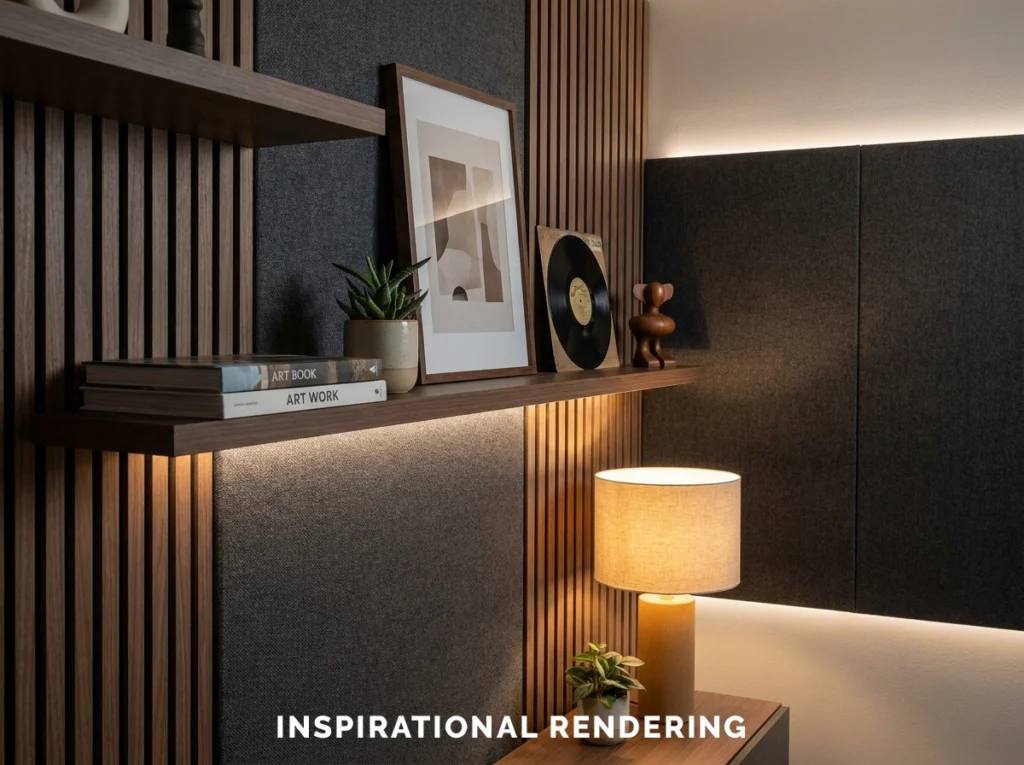
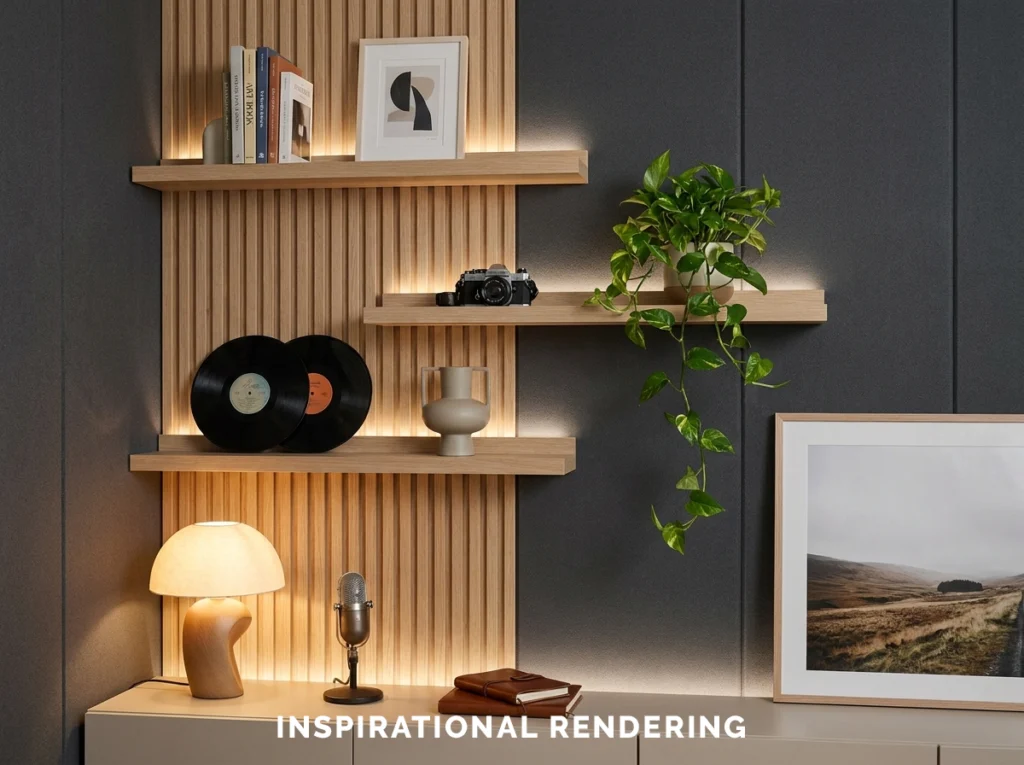
Wood slat acoustic treatments can work especially well because they introduce texture and warmth while still looking intentional on camera.
You also do not need to cover every wall in foam. Rugs, curtains, upholstered furniture, bookshelves, acoustic panels, and other soft materials can all contribute to how the room sounds.
Charcoal Studio
Charcoal walls
Heather gray acoustic panels
Walnut slats
Black equipment
Navy Studio
Deep navy walls
Dark gray acoustic panels
Walnut furniture
Cream seating
Sage Studio
Muted green walls
Oatmeal acoustic fabric
White oak
Cream furniture
Choose Flooring With Sound and Lighting in Mind
The floor can influence both the appearance and acoustics of a content creation room.
Carpet
Carpet is acoustically forgiving and absorbs a significant amount of reflected sound. It can be a good fit for dedicated studios, although some creators prefer the look of hard flooring.
Hardwood and LVP
Wood and luxury vinyl flooring look excellent with dark walls, navy, sage, charcoal, and neutral palettes. They also introduce warmth into studios containing a lot of black equipment.
Because hard flooring reflects more sound, consider adding a substantial area rug near the recording position.
Tile and Highly Reflective Surfaces
Tile, polished concrete, and other hard surfaces can increase sound reflections. Glossy flooring can also reflect studio lights into the camera frame.
Decorating a Streaming or Podcast Background
The goal is not to fill every empty surface. Instead, choose a limited number of objects that reinforce the style or subject of the content.
Floating shelves
Books
Framed artwork
Records
Instruments
Plants
Collectibles
Lamps
Wood slat features
Acoustic panels
A good camera background should look intentional without looking overcrowded.
Avoid Visual Clutter
Dozens of small objects can make a background distracting. Instead, combine a few larger items with negative space. A single plant, lamp, piece of artwork, and shelf often creates a more professional background than an entire wall filled with decorations.
Watch Reflective Materials
Mirrors, glossy framed artwork, glass tables, polished metal, and shiny cabinets can reflect studio fixtures. Always look through the camera before finalizing the placement of reflective decor. A reflection that is barely noticeable while standing in the room can become obvious once a powerful key light is turned on
Color Schemes for Video and Photo Editing Rooms
If the room is primarily used for editing photography or video, the design priorities change slightly. Strong wall colors near your workstation can influence how you perceive the image on your monitor.
For color-sensitive work, consider:
Neutral gray walls
Black or dark furniture
Minimal saturated decor immediately around the monitor
Controlled window light
Neutral bias lighting behind the display
That does not mean the entire studio has to be gray. You can create a more colorful podcast or filming background on the opposite side of the room while keeping the editing area visually neutral.
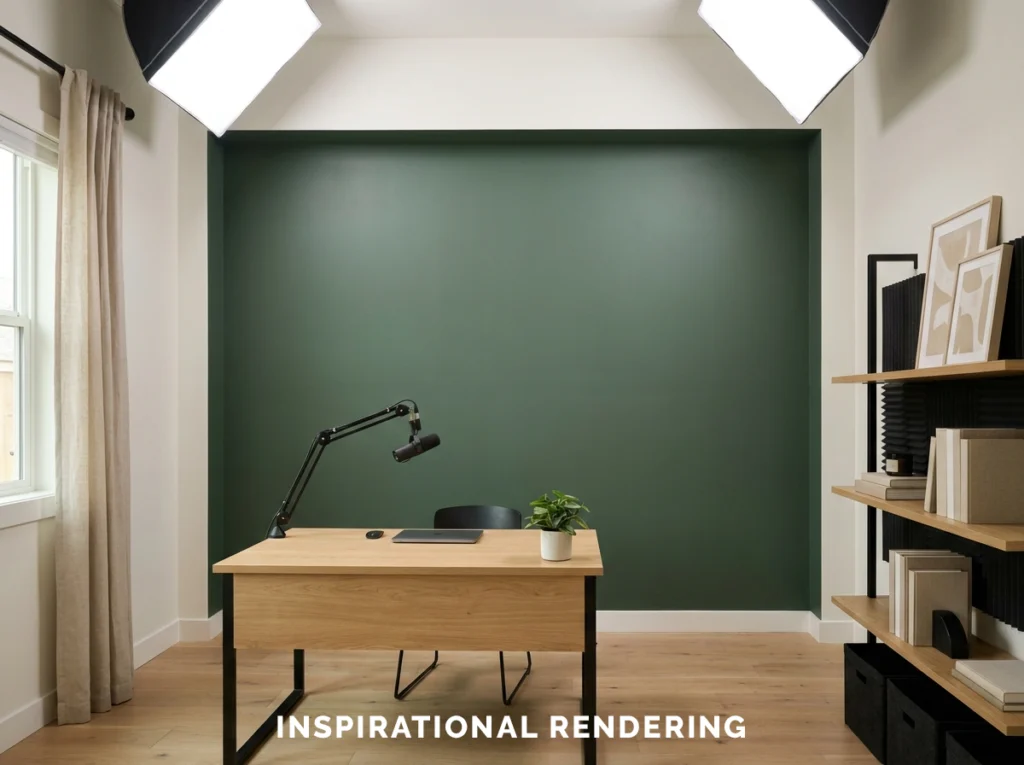
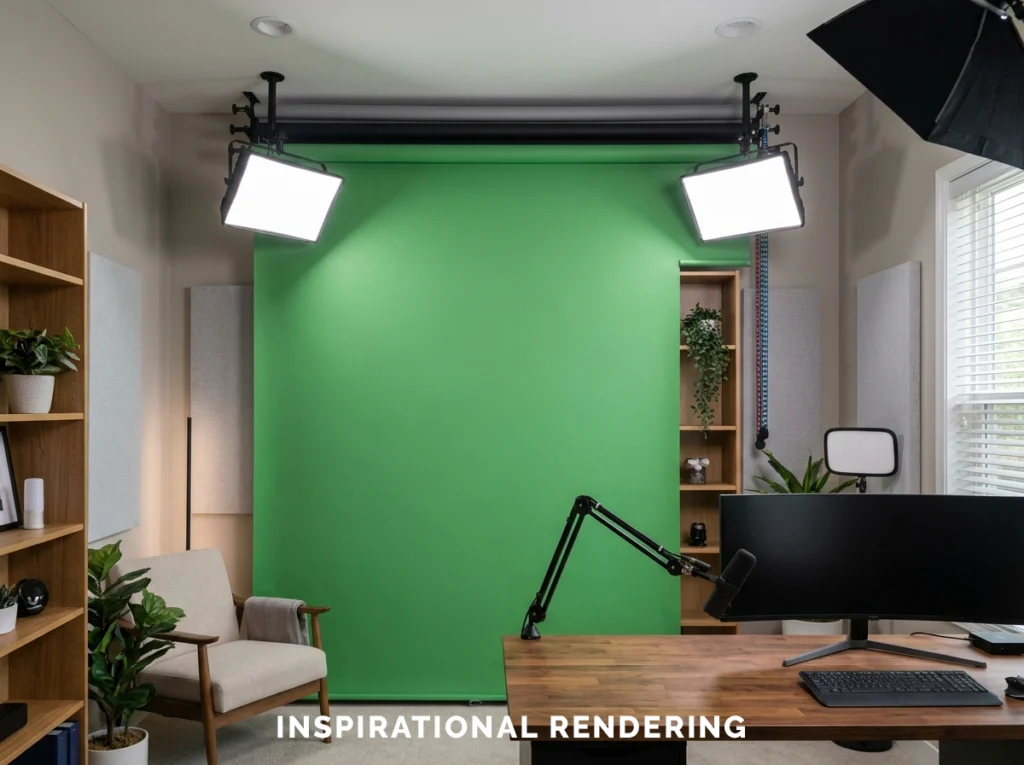
Designing Around a Green Screen
A green screen should be treated differently from a normal painted studio background.
The goal is not interior design. It is consistent color and consistent lighting.
A dedicated chroma key surface should be:
Evenly colored
Low in sheen
Smooth
Evenly illuminated
Positioned far enough behind the subject to reduce shadows and reflected green light
If you only use a green screen occasionally, we generally would not recommend designing the entire room around it.
A retractable screen or portable backdrop lets you maintain an attractive permanent studio while still having access to chroma key when needed.
A permanently painted green wall makes more sense when virtual production is one of the room's primary functions.
How to Choose the Right Studio Color Scheme
Before you commit to a palette, answer these questions.
What type of content will you create?
What wall will viewers see?
Will you use RGB lighting?
How much natural light enters the room?
Will the room also function as an office or living space?
What color is your furniture?
What colors appear in your branding?
Do you need acoustic treatment?
Will you be editing color-sensitive photography or video?
Do you prefer a bright, natural look or a darker cinematic style?
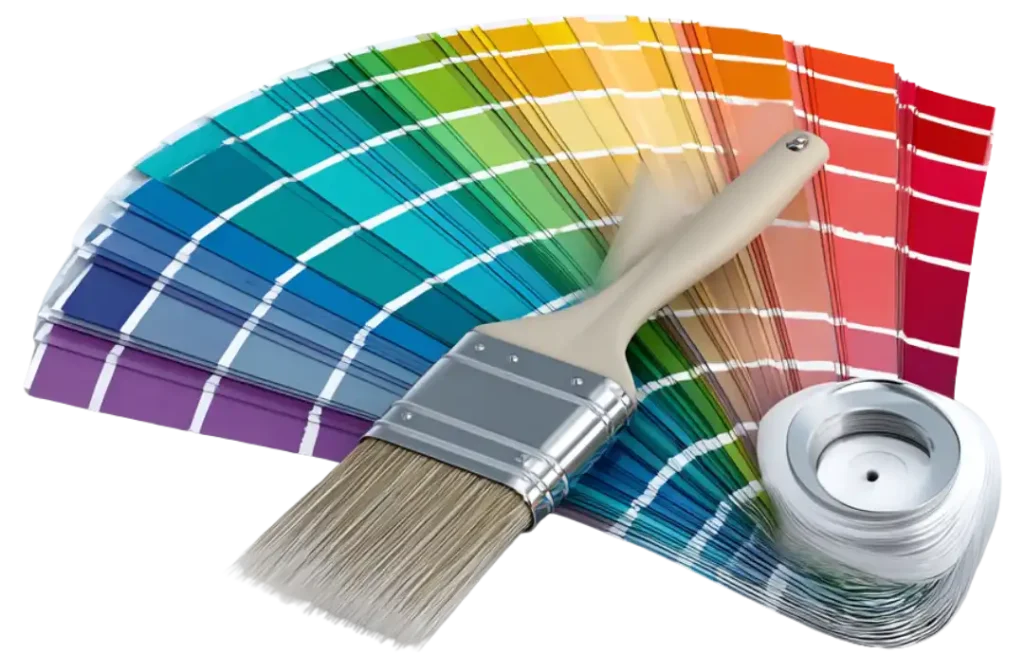
Once you have those answers, narrow the palette down to a few options and test them in the actual room. Do not rely entirely on a paint chip or computer screen. Place paint samples on the wall and look at them:
During the day
At night
Under your regular room lighting
Under your studio lights
Through the camera you actually plan to use
The camera test is particularly important. A paint color can look excellent to your eye and noticeably different once your lighting, lens, exposure, and white balance are introduced.
Colorado Considerations for Home Studios
Many Northern Colorado creators set up studios in spare bedrooms, offices, and basements. A few local conditions are worth planning for:
Bright, changing daylight. High-altitude sunlight is intense, and it shifts quickly through the day. A window in the shot or behind the camera can change your exposure and color balance during a long stream, so plan for blackout shades or diffusion if you rely on artificial light.
Early winter sunsets. Long winters mean daylight-only setups lose their light early in the afternoon for months. A neutral wall color that also looks good under your studio lights keeps your look consistent.
Dry air and static dust. Low humidity makes dust cling to dark matte walls and acoustic panels, and it shows on camera. Wipe-friendly finishes and regular dusting help, and a humidifier can reduce static near equipment.
Basement studios. Basements are popular for studios because they are quieter and easier to control for light. They can run cooler, so keep the space warm when painting so the paint cures well.
Snow light through windows. On snowy days, bright reflected light from outside can spill into the room and wash out a light-colored background if windows are not covered.
How to Test a Studio Paint Color on Camera
Narrow it to two or three finalists. Pick from the color family that fits your content, such as charcoal or navy for dark setups, or off-white or sage for bright ones.
Paint large sample boards in your planned sheen. Make each board big enough to fill a good part of the background in your normal camera frame.
Set up your real lighting. Turn on your key light, fill light, and any RGB or background lights at the settings you normally use.
Record a short test clip with each sample. Sit in your usual spot and film yourself in typical clothing so you can judge contrast between you and the wall.
Review the footage on a calibrated or neutral screen. Look for hot spots, color casts on your skin, and whether the wall reads as the color you expected.
Check the room in person too. Make sure the color still feels comfortable when the cameras are off, especially if the room has other uses.
Quick Paint Sheen Guide for Studio Surfaces
Studio lights make sheen choices more noticeable than in a typical room. Here is a quick reference for the main surfaces in a streaming room or podcast studio:
Surface
Recommended Sheen
Why
Camera background wall
Matte
Minimizes glare and hot spots from studio lights
Other walls
Eggshell
Low reflection with better wipeability for daily use
Ceiling
Flat
Reduces overhead reflections in wider shots
Painted green screen wall
Matte
Even, non-reflective surface for cleaner keying
Trim and doors
Satin
Durable without the shine of semi-gloss on camera
Built-in shelves and cabinets
Satin enamel
Hard, cleanable finish that stays low-glare
Professional Interior Painting in Northern Colorado
A streaming room, podcast studio, or content creation space should have a wall color and finish that work with the lighting, furniture, acoustic treatments, and camera setup in the room.
MGM Painting Co. provides professional interior painting services for homeowners and businesses throughout Northern Colorado, including Fort Collins, Loveland, Windsor, Timnath, Greeley, Wellington, Johnstown, Longmont, Berthoud, Ault, and Laporte.
Qualifying MGM Painting Co. projects include a free professional color consultation through our partnership with Guiry’s Color Source. Our customers can meet one-on-one with a professional designer who can help compare wall colors, accent colors, trim, finishes, furniture, lighting, and other permanent features in the room.
Contact MGM Painting Co. today to schedule a free painting estimate and start planning the right color scheme for your content creation space.
Charcoal, dark gray, muted navy, and other subdued colors are some of the most flexible choices for streaming rooms. They create a controlled background and allow RGB or accent lighting to add stronger colors without permanently dominating the space.
Deep navy, charcoal, warm gray, and muted earth tones work particularly well for podcast studios. Pair them with wood, leather, fabric acoustic treatments, lamps, and other textured materials to keep the background from appearing flat.
Not necessarily. Dark rooms are useful when you want strong lighting control or a cinematic appearance. Light rooms can work better for lifestyle, beauty, food, educational, and other content that benefits from a bright and natural appearance.
Black can work well in a dedicated studio, but it needs enough lighting, texture, and contrast. Charcoal is often a more flexible alternative because it provides a similar dark appearance while remaining easier to live with outside of recording sessions.
Matte and low-sheen finishes are generally the best choices for camera-facing walls because they reduce distracting reflections. Eggshell is another practical option when additional durability and cleanability are needed.
No. White and off-white walls can work very well for bright creator spaces. Keep in mind that they reflect more light, which can make dramatic or highly controlled lighting setups more difficult.
Charcoal, navy, muted green, greige, taupe, warm gray, and other subdued colors can all create effective backgrounds. The best option depends on the person’s clothing, skin tone, furniture, lighting, and the amount of separation between the person and the wall.
They do not have to. In many cases, contrast looks better. A neutral charcoal wall, for example, can work with blue, purple, amber, red, or green lighting. Keeping the wall relatively neutral also makes it easier to change the room’s appearance later.
No. Acoustic panels are available in many colors and can become part of the overall design. Gray, beige, navy, cream, and other fabric finishes can coordinate with the paint, furniture, flooring, and wood features in the studio.
A dark ceiling can work well in a dedicated studio where lighting control is important. A lighter ceiling may be better in a multipurpose office or smaller room where you want the space to feel brighter and more open.
Yes, but place it where the camera will actually see it. A single dark or colored wall can create a strong studio background while allowing the rest of the room to stay lighter and more versatile.
Choose a relatively neutral or muted base color and test it under your RGB lights before painting the entire room. Charcoal, gray, navy, and warm near-black shades can respond well to colored lighting without competing with it.
No, regular wall paint does not meaningfully reduce sound transmission or echo. Acoustic panels, rugs, soft furniture, and sealing gaps around doors do far more to improve recording sound.
Yes, many creators use a chroma key green paint on a smooth wall instead of a fabric screen. Use a matte finish, prep the surface carefully, and light the wall evenly so it keys cleanly.
Most interior paints are dry to the touch within hours, but they take longer to fully cure and harden. Follow the manufacturer’s recommendations and keep the room ventilated before hanging acoustic panels or leaning equipment against fresh walls.
About the Author
Matt Morgenstern
Matt Morgenstern is the founder and owner of MGM Painting Co, a locally owned painting company serving Fort Collins, Loveland, Windsor, and the Northern Front Range of Colorado. Matt and his team handle interior, exterior, cabinet, and commercial painting, and they offer free professional color consultations to help homeowners choose colors that work in Colorado light.
MGM Painting Co is BBB A+ accredited, a Nextdoor Neighborhood Favorite, and backs every project with a 100% satisfaction guarantee.