Best Cabinet Paint Colors for Colorado Homes
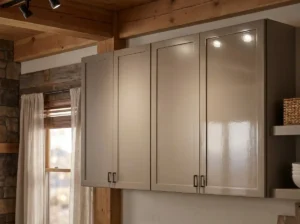
Cabinet color trends are becoming warmer, richer, and more connected to nature heading into 2026 and 2027. Cool gray cabinets are giving way to mushroom neutrals, warm whites, muted greens, earthy clay colors, deep blues, and sophisticated charcoal tones.
These trends are particularly well suited to Colorado homes. Strong sunlight, higher elevations, dry air, natural landscapes, and changing seasonal light can all influence how a cabinet color appears.
A shade that looks balanced in a paint store may appear brighter, cooler, warmer, or more saturated inside your home. That is why cabinet colors should always be tested under the actual lighting conditions of the room.
“Cabinet color is one of those decisions that needs to be made inside the home,” explains Matt Morgenstern, owner of MGM Painting Co. “Colorado light can bring out undertones that homeowners may never notice on a small sample card.”
This guide covers the best cabinet colors for Colorado kitchens, bathrooms, laundry rooms, home offices, entryways, built-ins, and other interior spaces.
Table of Contents
- Colors Look Different in Colorado
- Top Cabinet Color Trends
- Best General Kitchen Cabinets Colors
- Open Concept Home Cabinets
- Mountain Home Cabinets
- Historic Home Cabinets
- Newer Homes Cabinets
- Bathroom Vanity Cabinets
- Laundry Rooms Cabinets
- Home Office Cabinets
- Mudroom and Entry
- Choosing Cabinet Sheen
- Light Reflective Value
- Testing Cabinet Colors
- Cabinet Preperation
- Professional Cabinet Painters
Get Expert Help Choosing Cabinet Colors
Qualifying MGM Painting Co. projects receive a complimentary professional color consultation. Homeowners can meet one-on-one with a professional designer through our partnership with Guiry’s Color Source, who will help compare colors, evaluate undertones, and coordinate cabinetry with walls, trim, flooring, countertops, and hardware.
Why Cabinet Colors Look Different in Colorado
Colorado’s bright natural light can reveal undertones that are difficult to see on a small paint sample.
A neutral that appears beige in a showroom may look yellow in a sunny kitchen. A muted green may become noticeably gray in a shaded bathroom. Navy cabinets may look clearly blue during the day and almost black after sunset.
Elevation can also affect the intensity of natural light. Many Colorado homes receive bright, direct sunlight that makes colors appear cleaner and more saturated than they might in cloudier parts of the country.
The direction of the room’s windows is another important consideration. Matt recommends evaluating cabinet samples more than once before making a decision. “We encourage homeowners to look at cabinet colors in the morning, afternoon, and evening,” he says. “A color can look completely different once the direct sunlight leaves the room.”
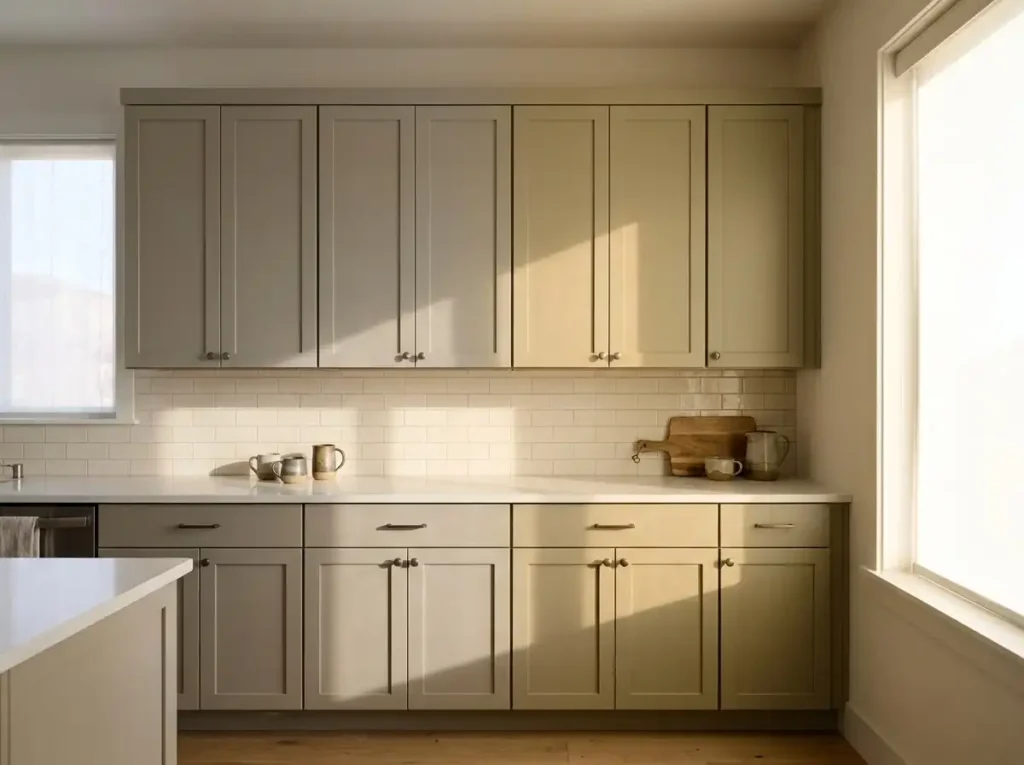
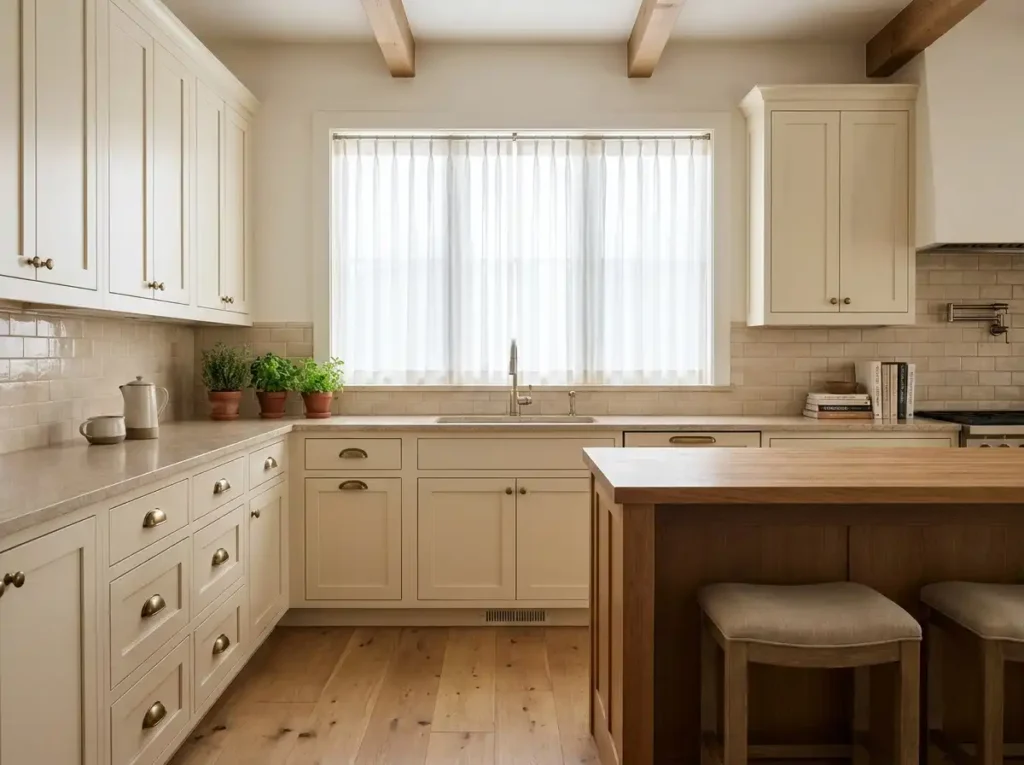
North-Facing Rooms
North-facing rooms receive cooler and more indirect light. Gray, blue, and green undertones may become more noticeable in these spaces. Warm whites, mushroom neutrals, beige, taupe, and warm olive can help prevent the room from feeling cold.
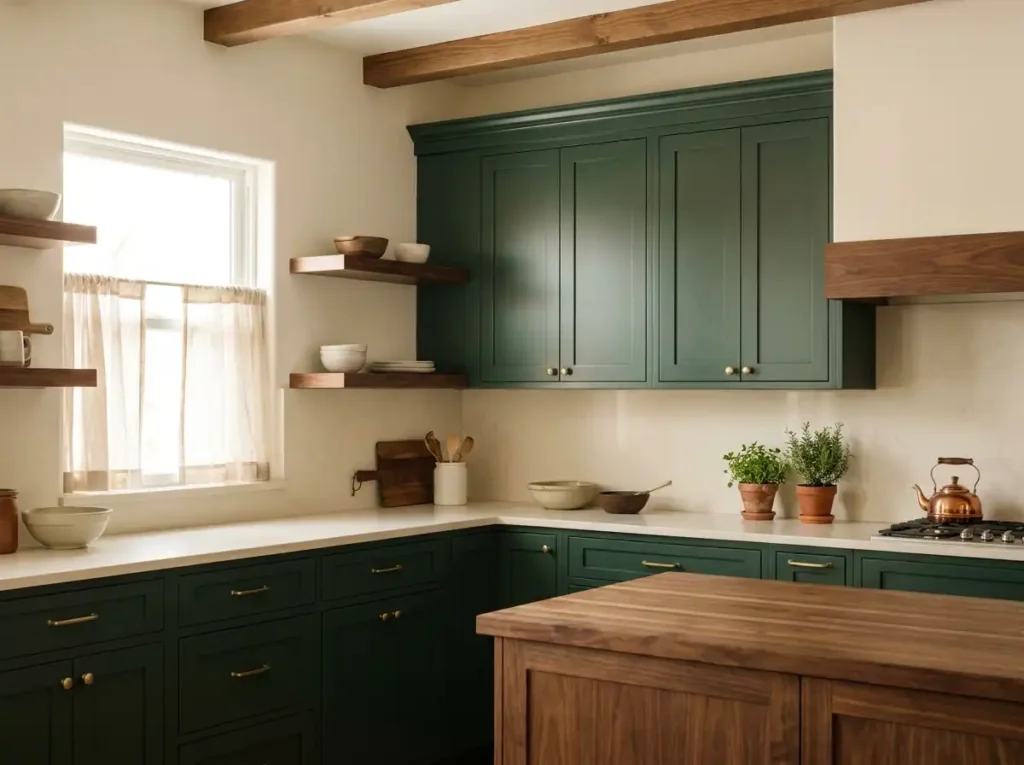
South-Facing Rooms
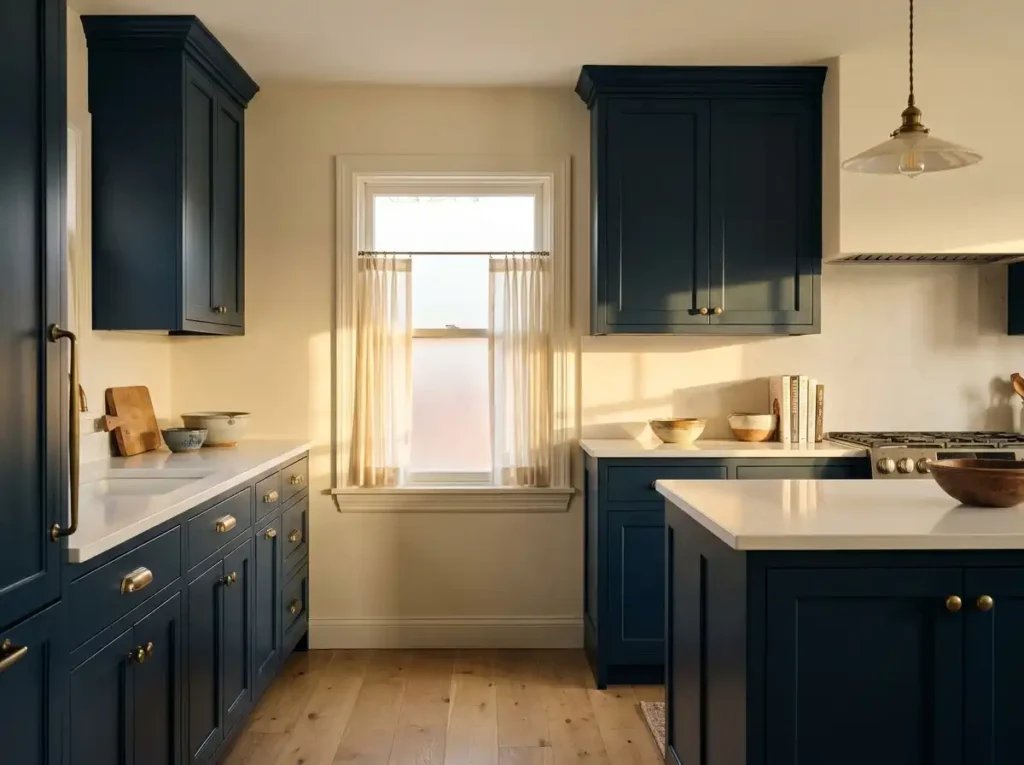
South-facing rooms receive warmer and more consistent daylight. These spaces can usually support deeper colors such as forest green, navy, charcoal, terracotta, and brown-black. Very warm whites and yellow-based neutrals may appear more golden than expected.
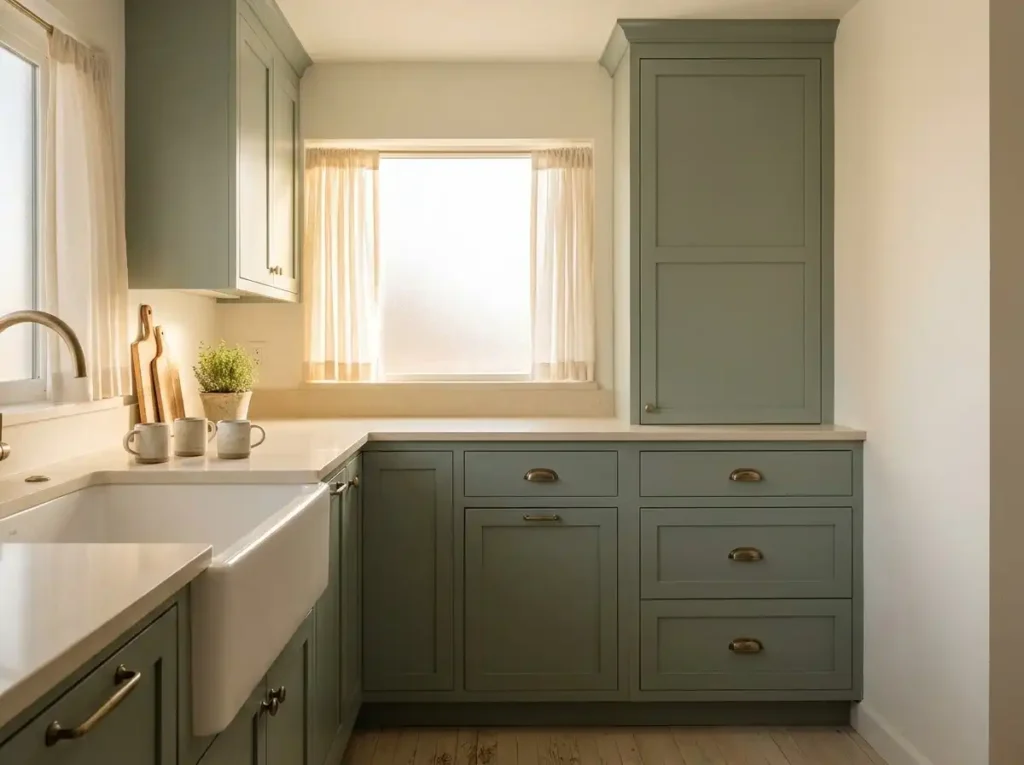
East-Facing Rooms
East-facing rooms are brightest and warmest in the morning. Cabinet colors may look softer and cooler later in the day. Evaluate samples during both morning sunlight and evening artificial light.
West-Facing Rooms
West-facing rooms receive stronger afternoon and evening light. Cream, beige, clay, and warm wood tones may become noticeably richer during the second half of the day. Deep green, navy, and charcoal can help balance intense western light.
Top Cabinet Color Trends
The strongest cabinet color families for Colorado homes include:
- Warm white and cream
- Mushroom, taupe, and khaki
- Sage, olive, and smoky green
- Dusty blue and slate
- Navy and deep teal
- Terracotta and muted clay
- Charcoal and brown-black
- Natural wood-inspired browns
These colors reflect a broader move away from cold gray interiors and toward warmer, nature-inspired palettes.
The best choices feel grounded and flexible rather than overly trendy. They also coordinate well with materials commonly found in Colorado homes, including stone, wood, leather, brick, metal, and natural textiles.
Warm White and Cream Cabinets
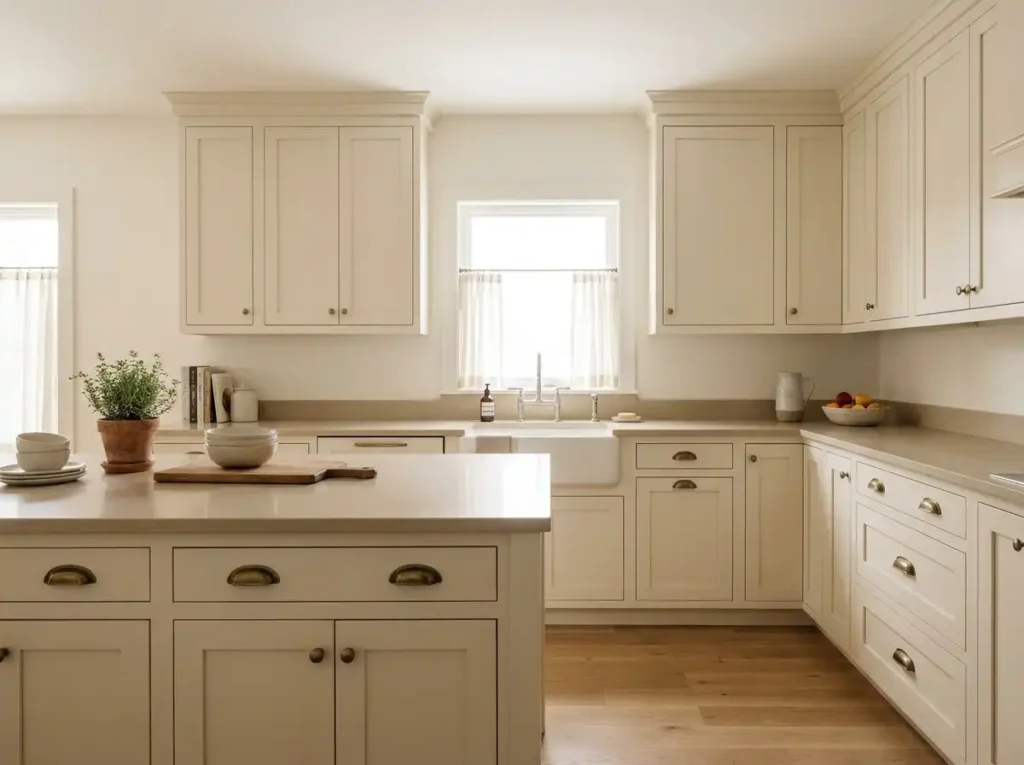
White cabinetry remains popular, but the preferred whites are becoming warmer and softer. Cool, blue-based whites can appear harsh under Colorado’s intense sunlight, particularly in rooms with white quartz, gray flooring, and stainless steel appliances. Warm whites and creams create a softer transition between cabinetry and the surrounding materials.
Warm white cabinets work with:
- Oak or walnut flooring
- Beige or cream quartz
- Soapstone
- Natural stone
- Brass hardware
- Matte black hardware
- Warm gray or greige walls
Best Uses
Warm white is a practical choice for smaller kitchens, shaded bathrooms, laundry rooms, historic homes, traditional interiors, and rooms with limited natural light. It can brighten a room without creating the stark appearance of a pure white.
What to Watch For
A white with too much yellow may look noticeably creamier in a south- or west-facing room. A white with too much gray may feel cold in a north-facing room. Always compare the sample with the countertops, backsplash, flooring, appliances, and trim.
Mushroom, Taupe, and Warm Greige Cabinets
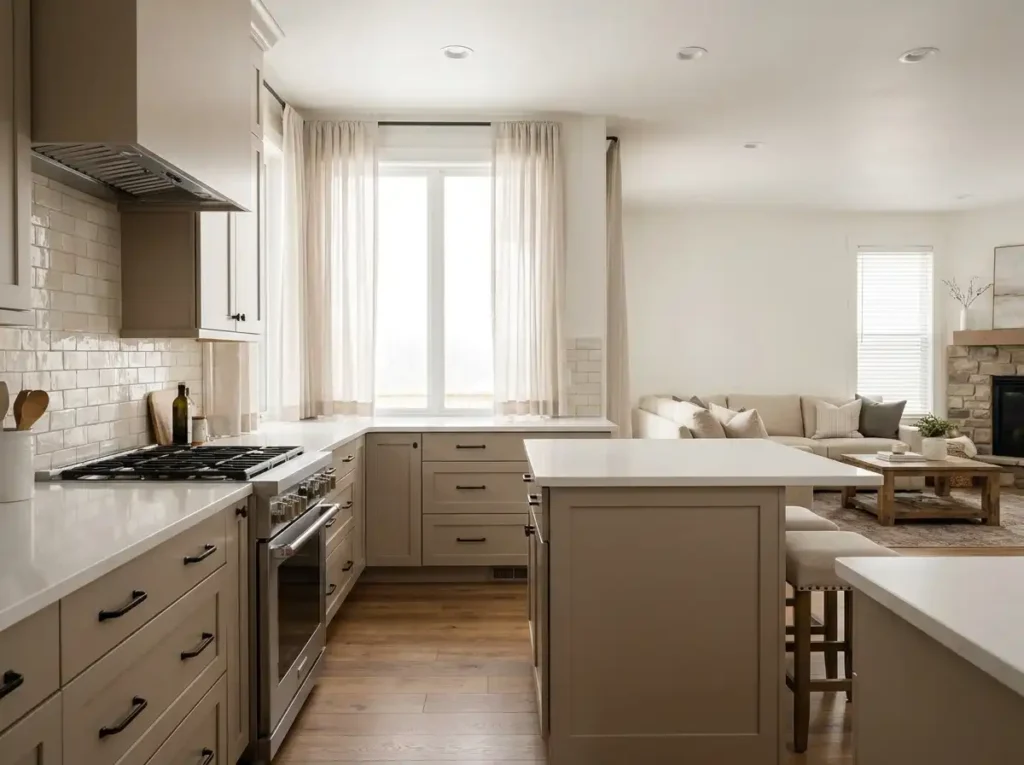
Mushroom and taupe are among the most adaptable cabinet colors for Colorado homes. These shades provide more depth than white while remaining neutral enough to coordinate with changing furniture and décor.
Mushroom and taupe cabinets work with:
- White quartz
- Black granite
- Cream tile
- Travertine
- Natural oak
- Medium brown flooring
- Matte black hardware
- Aged brass hardware
Best Uses
This color family works especially well in open-concept homes where the kitchen connects directly to the living and dining areas. Mushroom cabinets can also soften newer interiors that contain large amounts of white, gray, or black.
What to Watch For
Greige is highly sensitive to surrounding materials. Some shades may lean green beside pink-beige tile. Others can appear violet beside yellow oak or certain gray flooring. Test the color beside every permanent finish in the room before committing.
Sage Green Cabinets
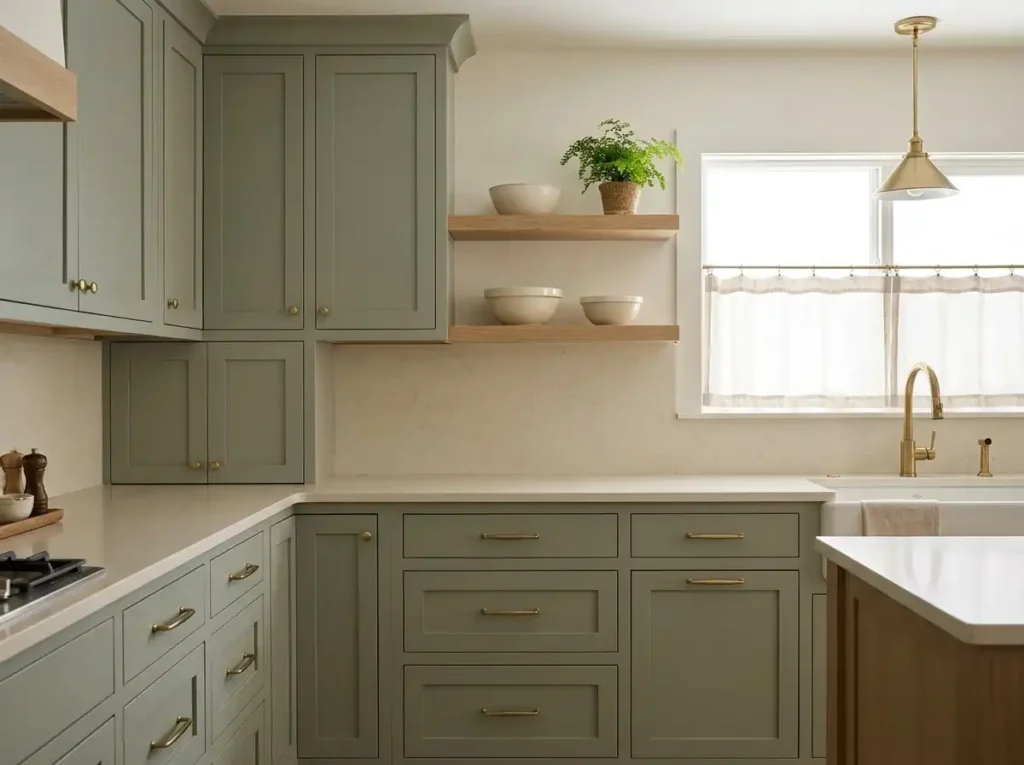
Sage continues to be one of the most versatile cabinet colors for Colorado homes. It introduces color without becoming overwhelming. Sage also coordinates naturally with oak, stone, leather, linen, marble, and warm metal finishes.
Sage Green cabinets Works with
- White or cream quartz
- Marble
- Butcher block
- White oak
- Walnut
- Brushed brass
- Bronze
- Soft black hardware
Best Uses
Sage works well in kitchens, bathroom vanities, laundry rooms, mudrooms, home offices, and built-in storage. It can complement mountain-inspired interiors, craftsman homes, modern farmhouses, and contemporary spaces.
What to Watch For
Sage may appear flatter or grayer in a north-facing room. In spaces with limited natural light, choose a slightly warmer or lighter green and make sure the room has adequate task lighting.
Olive and Moss Green Cabinets
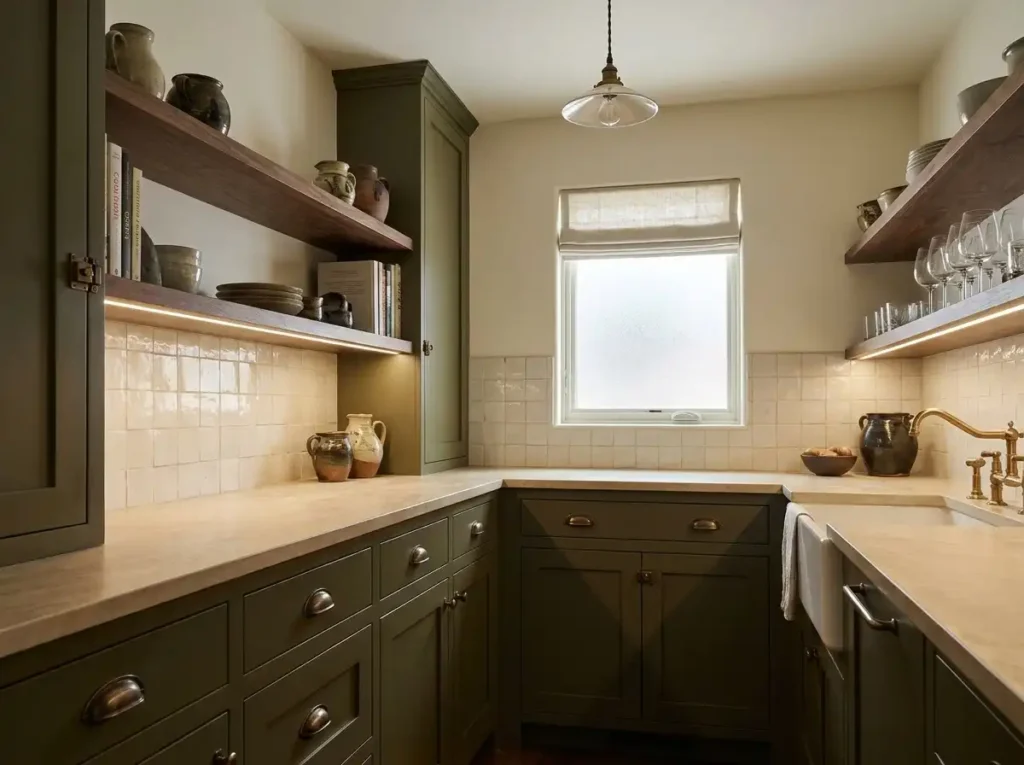
Olive and moss are deeper alternatives to sage. These colors relate naturally to Colorado’s landscapes and pair well with wood, stone, leather, wool, and other organic materials. They can make cabinetry feel substantial, established, and connected to the architecture of the home.
Olive cabinets work with:
- Cream walls
- Light stone counters
- Warm quartz
- White oak
- Walnut
- Antique brass
- Aged bronze
- Handmade tile
Best Uses
Olive is a strong option for kitchen islands, butler’s pantries, mudroom cabinets, home office bookcases, dining room built-ins, and bathroom vanities. It is particularly effective in mountain, foothills, craftsman, rustic, and nature-inspired homes.
What to Watch For
Some olive colors contain strong yellow undertones. Bright south- or west-facing light can make those undertones more visible. A grayer olive is often easier to coordinate with modern quartz, stainless steel, and cooler flooring.
Dusty Blue and Slate Cabinets
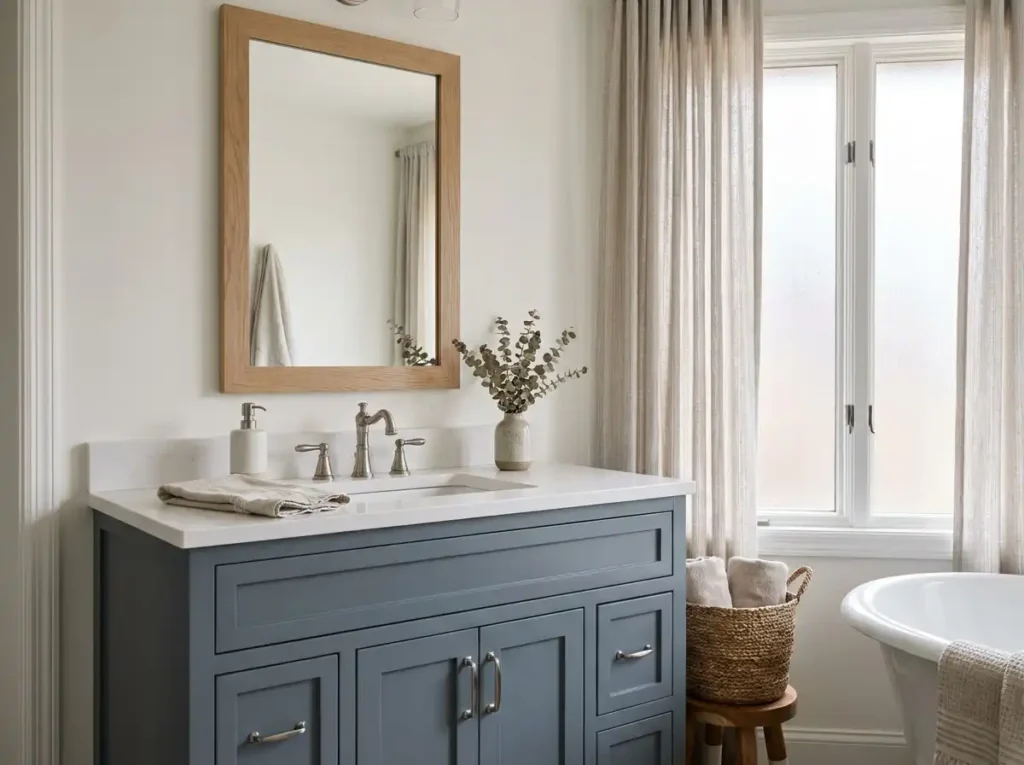
Blue cabinetry remains popular, but the trend is moving away from bright coastal shades and toward muted slate, blue-gray, and mineral-inspired colors. Dusty blue introduces personality while maintaining a calm and flexible appearance.
Dusty blue cabinets work with:
- Warm white walls
- White quartz
- Light gray stone
- White oak
- Medium brown flooring
- Brushed nickel
- Polished nickel
- Brass hardware
Best Uses
Slate and dusty blue work well in bathroom vanities, laundry rooms, home offices, bedroom built-ins, kitchen islands, and dining room storage.
These shades can be particularly attractive in bright south-facing rooms because the warm sunlight helps prevent the blue from feeling too cold.
What to Watch For
Blue-gray colors may become noticeably cooler in north-facing rooms or under cool LED lighting. Use warm or neutral-white bulbs and review samples during both daylight and evening hours.
Navy and Deep Teal Cabinets
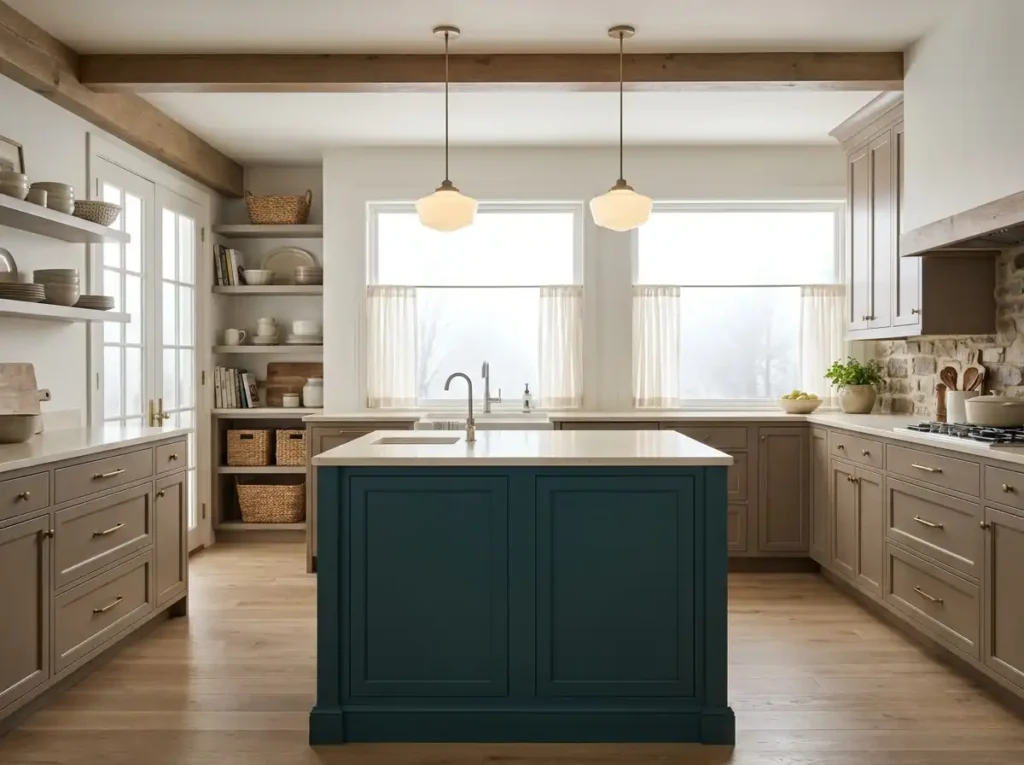
Navy provides strong contrast and can turn cabinetry into an architectural feature. Deep teal offers similar depth but contains enough green to feel more organic and connected to natural materials.
Navy and teal cabinets work with:
- White quartz
- Cream quartz
- Marble
- Light or medium wood
- Brass
- Bronze
- Polished nickel
- Warm white walls
Best Uses
Navy and teal are popular for kitchen islands, lower cabinets, bar cabinets, media centers, built-in bookcases, home offices, and dining room storage.
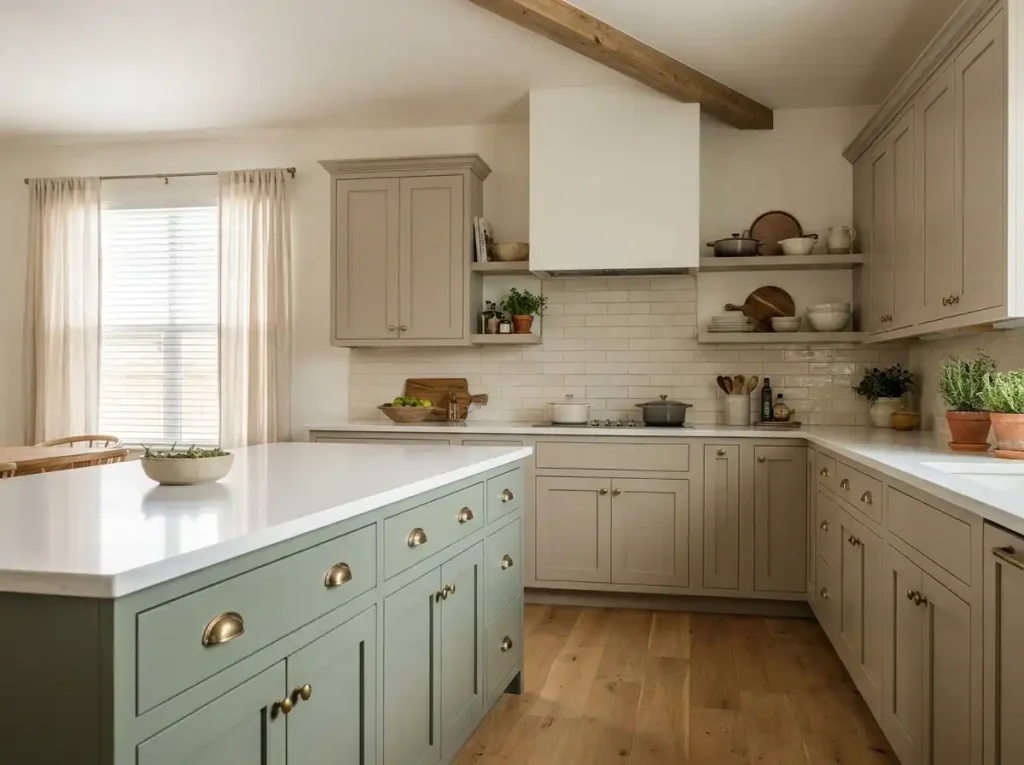
In an open kitchen, consider using navy or teal on the island while keeping the perimeter cabinets warm white, mushroom, or taupe.
“A dark island is often a good place to introduce a bolder color,” Matt says. “It creates a focal point while keeping the rest of the kitchen lighter and easier to coordinate.”
What to Watch For
Navy cabinets tend to show dust, cooking residue, fingerprints, and water marks. They can also appear nearly black at night. Evaluate the color under the exact light fixtures and bulb temperatures used in the room.
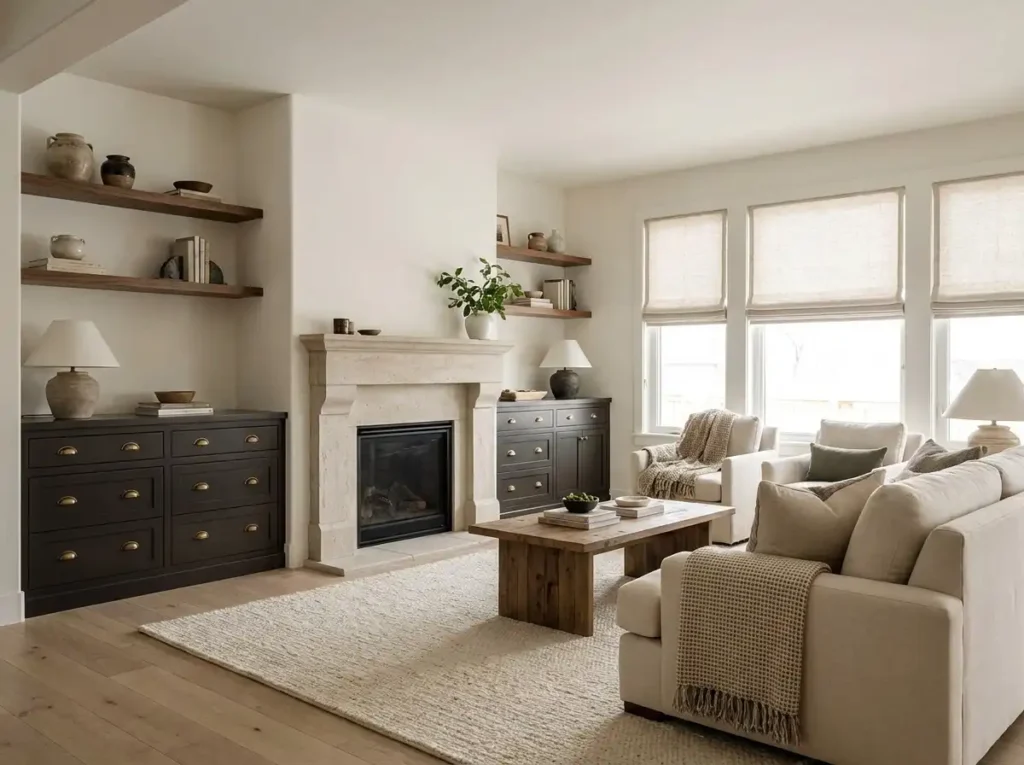
Charcoal and Brown-Black Cabinets
Charcoal and soft black cabinets remain popular for homeowners who want strong contrast without the severity of a pure black. The most adaptable dark cabinet colors contain subtle brown, green, or blue undertones.
Charcoal cabinets work with:
- Warm white walls
- Light quartz
- Marble
- White oak
- Walnut
- Brass
- Bronze
- Black hardware
- Natural stone
Best Uses
Charcoal is effective on kitchen islands, lower cabinets, fireplace built-ins, media cabinets, home office shelving, entryway lockers, and powder room vanities.
Large windows and strong natural light can help dark cabinetry feel balanced. In smaller or shaded rooms, limit charcoal to one cabinet section or a single focal point.
What to Watch For
Dark cabinets reveal dust, pet hair, fingerprints, sanding marks, and surface imperfections. Proper preparation and a smooth finish are especially important when using deep colors.
Terracotta and Clay Cabinets
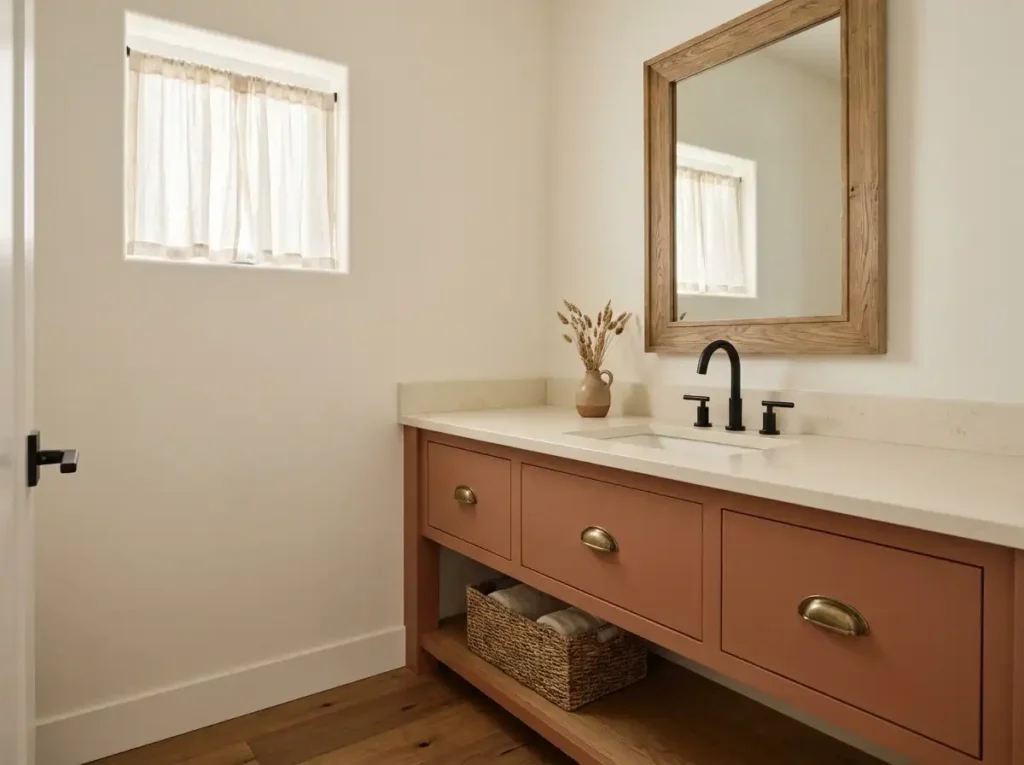
Terracotta, clay, and muted brick colors are becoming more common as homeowners move away from sterile interiors. These colors bring warmth to rooms dominated by tile, stone, metal, glass, and other hard surfaces. They also connect naturally with Colorado’s earth tones and dry landscapes.
Terracotta or Clay Cabinets work with:
- Warm white walls
- Cream quartz
- White tile
- Natural oak
- Black fixtures
- Bronze
- Aged brass
- Woven textures
Best Uses
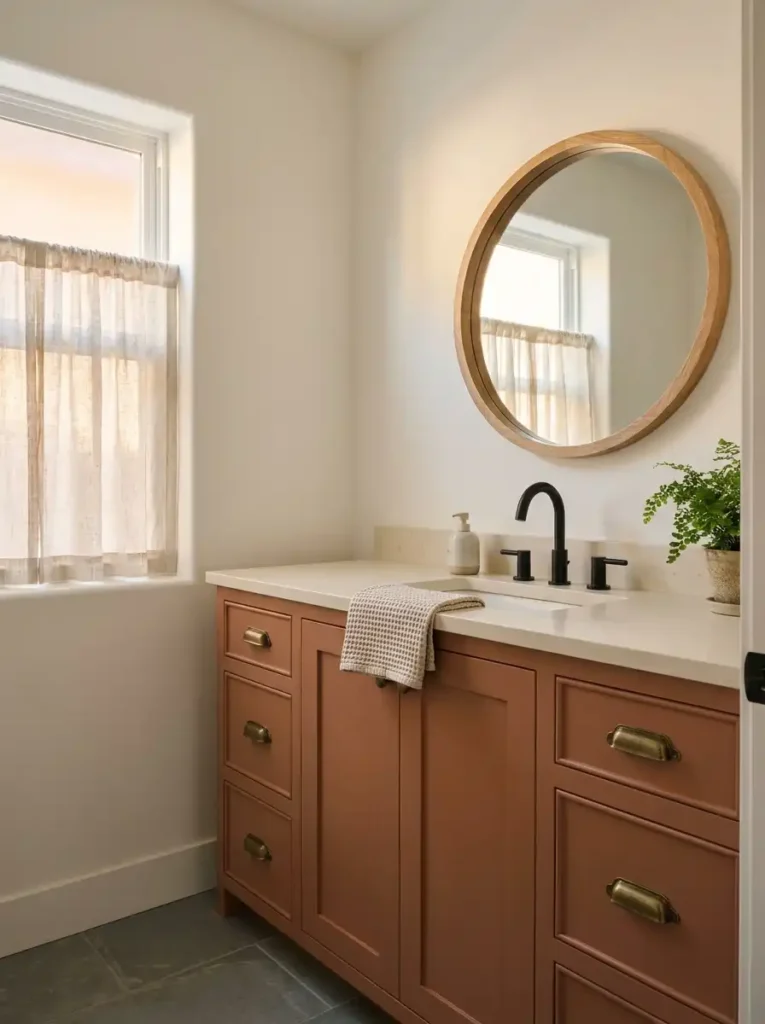
Terracotta is usually most effective when used selectively. Consider it for bathroom vanities, kitchen islands, freestanding cabinets, bar areas, entryway storage, and dining room buffets.
It works particularly well in Southwestern, craftsman, rustic, eclectic, and Spanish-influenced interiors.
What to Watch For
Strong afternoon light can intensify orange and red undertones. Test terracotta colors carefully in west-facing rooms and balance them with light walls, counters, and flooring.
Best General Kitchen Cabinet Colors
The most dependable kitchen cabinet colors for 2026 and 2027 include:
- Warm white
- Mushroom
- Warm taupe
- Sage
- Olive
- Dusty blue
- Navy
- Charcoal
Cabinet Colors for Kitchens With Honey Oak Wood
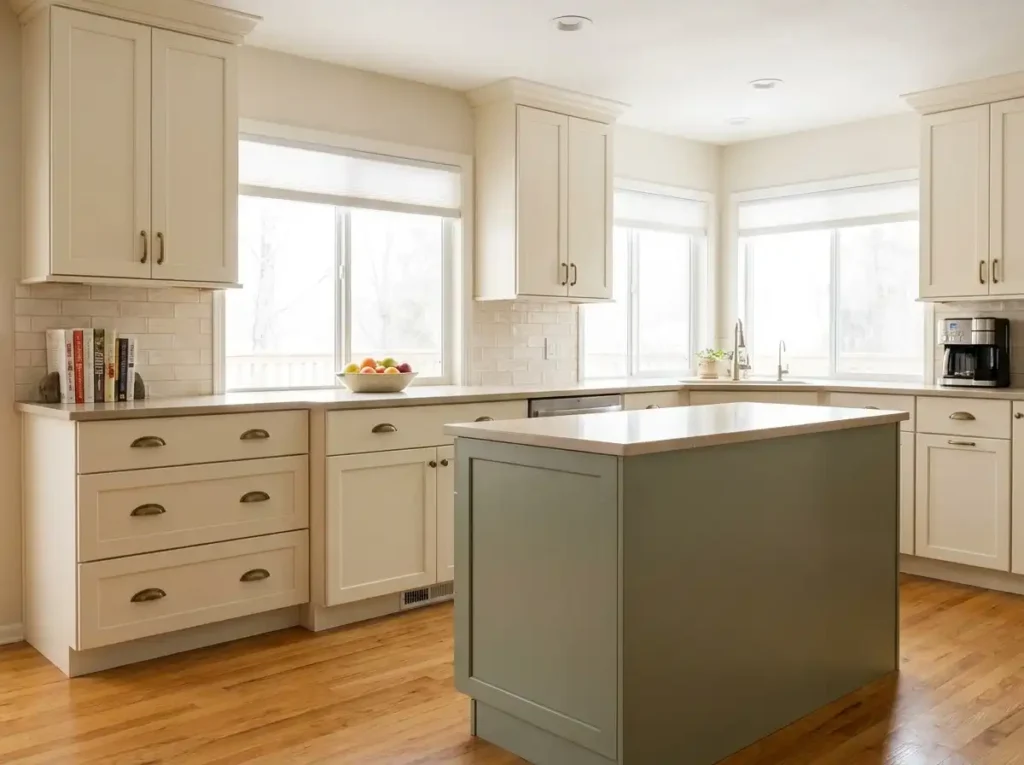
Honey oak remains common in many Colorado homes. Instead of trying to visually cancel the warmth of the wood, choose cabinet colors that coordinate with it. Avoid icy gray or blue-white cabinets. These colors can make honey oak appear more orange.
Good options include:
- Warm white
- Mushroom
- Cream
- Sage
- Muted olive
- Warm taupe
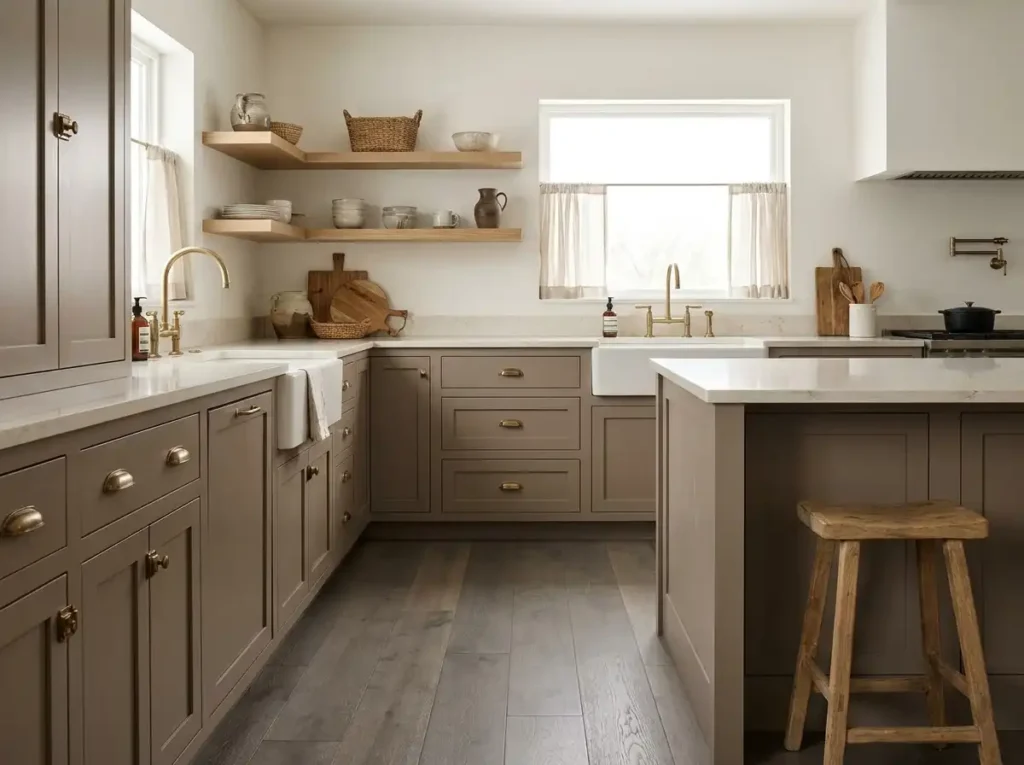
Cabinet Colors for Kitchens With Gray Flooring
Warm cabinet colors can prevent gray flooring from making the kitchen feel cold. A navy or charcoal island can also add contrast when the surrounding cabinets are light.
Good Options Include:
- Mushroom
- Taupe
- Cream
- Warm white
- Sage
- Clay-beige.
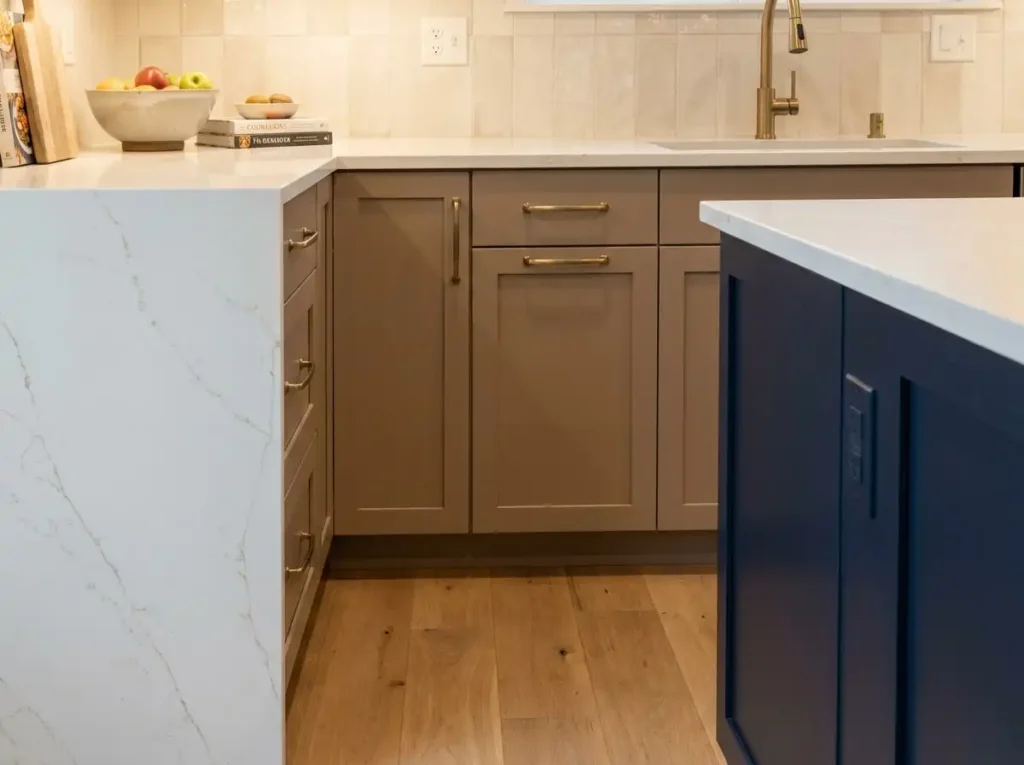
Cabinet Colors for Kitchens With White Quartz
White quartz provides flexibility, but its undertone still matters. Compare the cabinet sample directly with the quartz to determine whether the surface contains warm, cool, gray, or yellow undertones.
Good Options Include:
- Warm white
- Sage
- Navy
- Mushroom
- Clay
- Charcoal
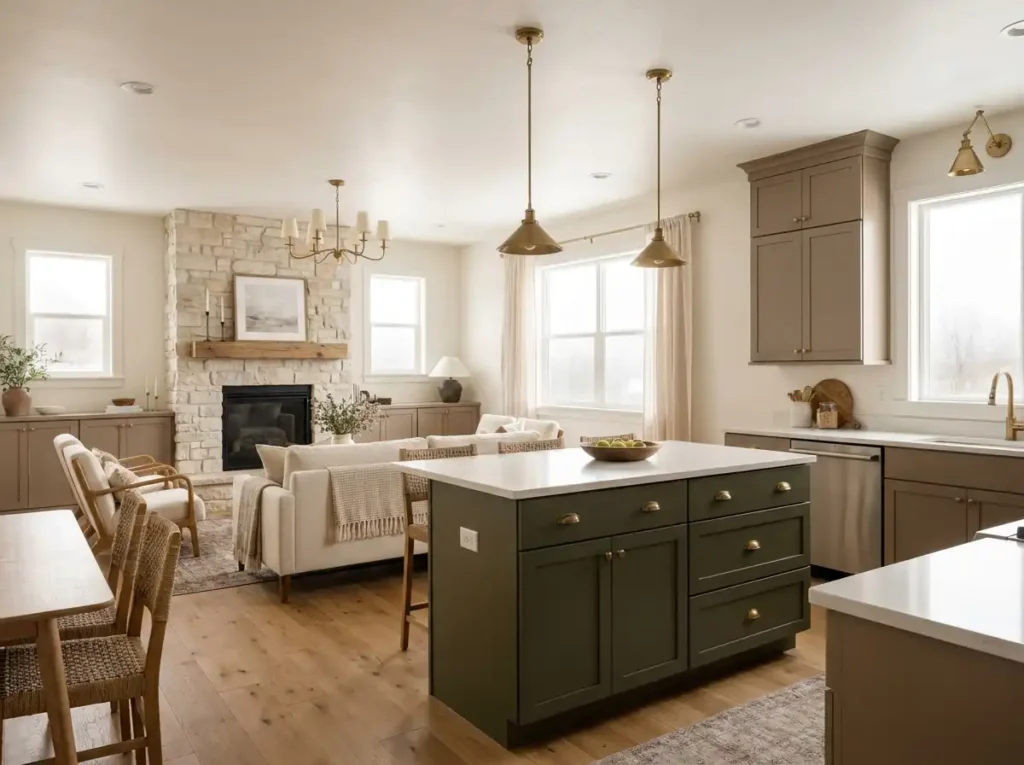
Cabinet Colors for Open-Concept Homes
The cabinet color should coordinate with the flooring, fireplace, wall paint, furniture, and nearby architectural finishes.
Mushroom, sage, warm white, and taupe are particularly effective because they transition easily between spaces. For stronger contrast, use olive, navy, deep teal, or charcoal on the island.
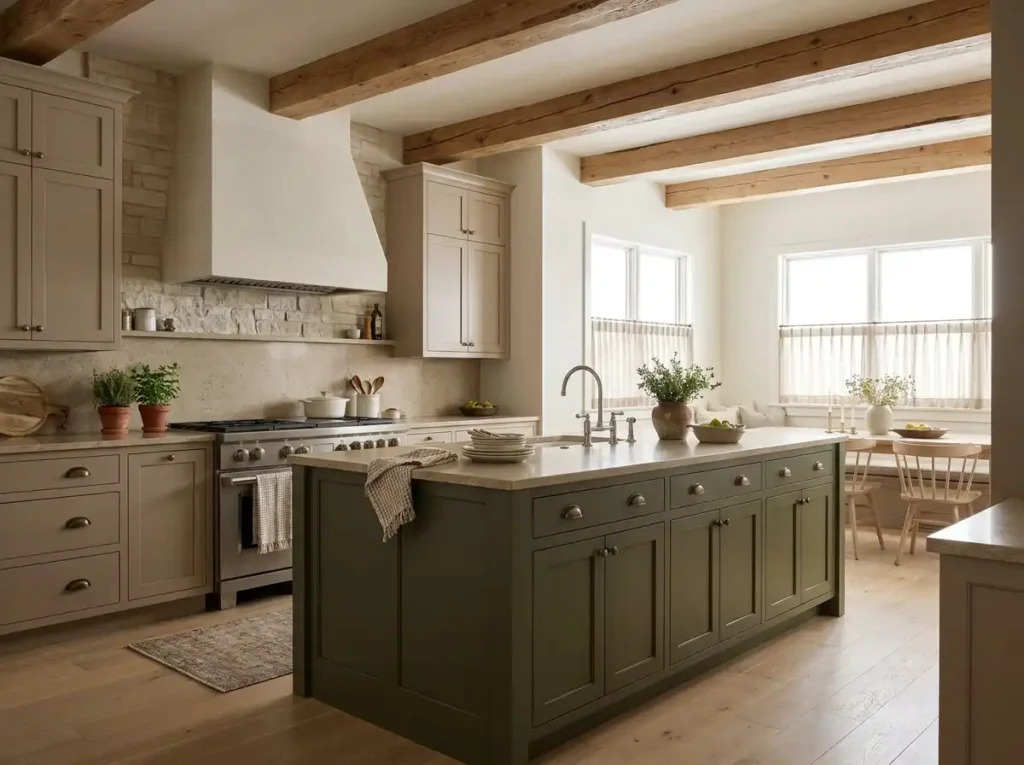
Cabinet Colors for Mountain Homes
Mountain homes often contain large windows, exposed beams, stone fireplaces, wood ceilings, and natural flooring.
Good Options Include:
- Warm white
- Mushroom
- Olive
- Forest green
- Charcoal
- Brown-black
- Deep navy
- Natural wood-inspired brown
Avoid selecting a dark color based only on daytime conditions. Large mountain windows can make cabinetry look bright during the day, but the same color may become much darker after sunset.
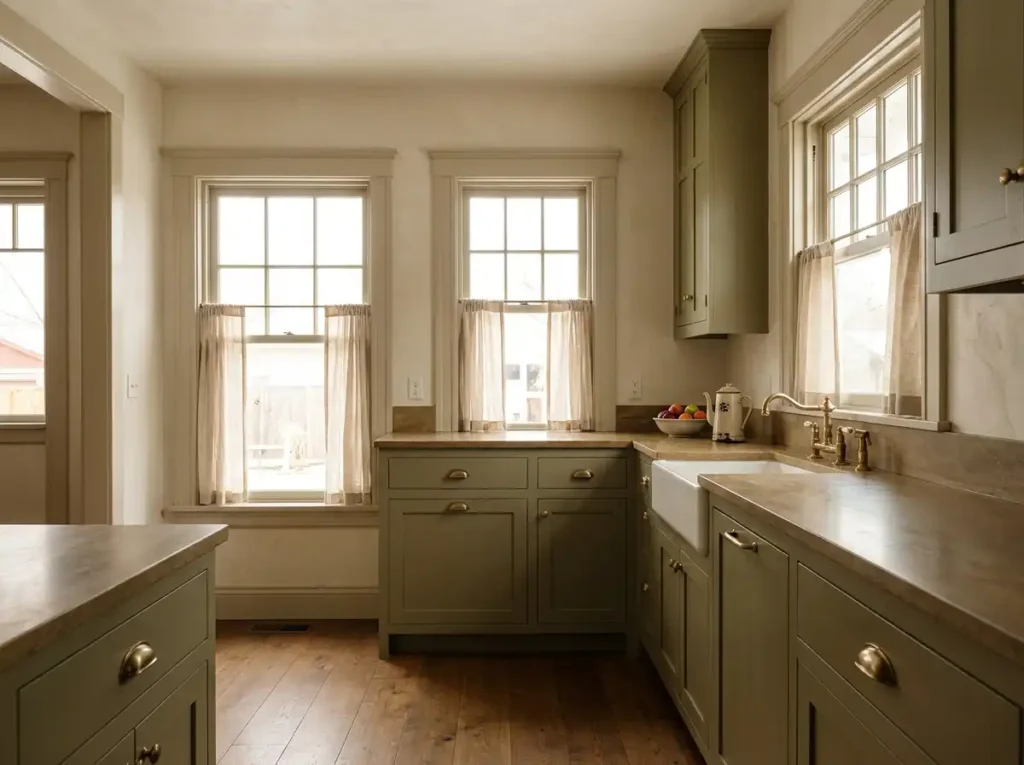
Cabinet Colors for Historic Homes
Historic Colorado homes may include craftsman, bungalow, Victorian, Spanish Revival, ranch, and early twentieth-century architectural influences.
Good Options Include:
- Warm white
- Cream
- Muted olive
- Sage
- Clay
- Deep green
- Navy
- Brown-black
- Natural wood tones
These colors coordinate well with original oak, brick, stone, plaster, built-ins, and traditional millwork. The cabinet color does not need to be historically exact, but it should feel connected to the home’s architecture and permanent materials.
Cabinet Colors for Newer Homes
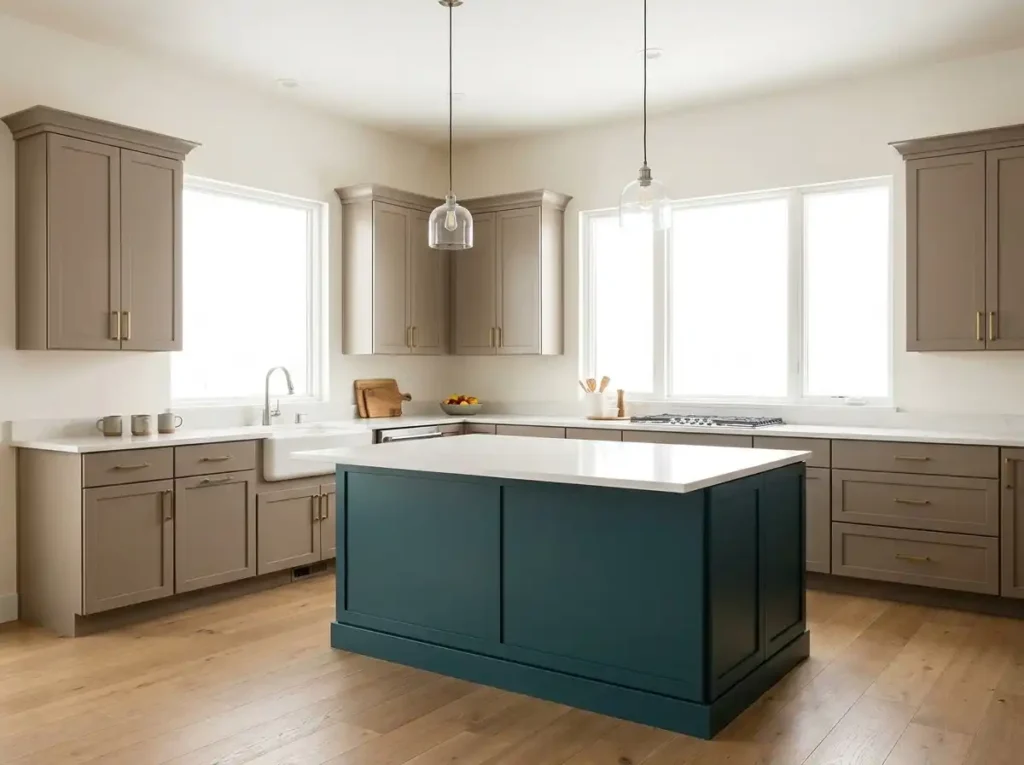
Newer Colorado homes often feature open layouts, large windows, white quartz, gray or light wood flooring, and connected kitchen and living spaces.
Recommended cabinet colors include mushroom, warm greige, sage, warm white, soft taupe, and dusty blue. For contrast, consider olive, navy, deep teal, charcoal, or brown-black.
A two-tone design is often effective. Use a lighter neutral on the perimeter cabinets and a deeper color on the island.
Best Bathroom Vanity and Cabinet Colors
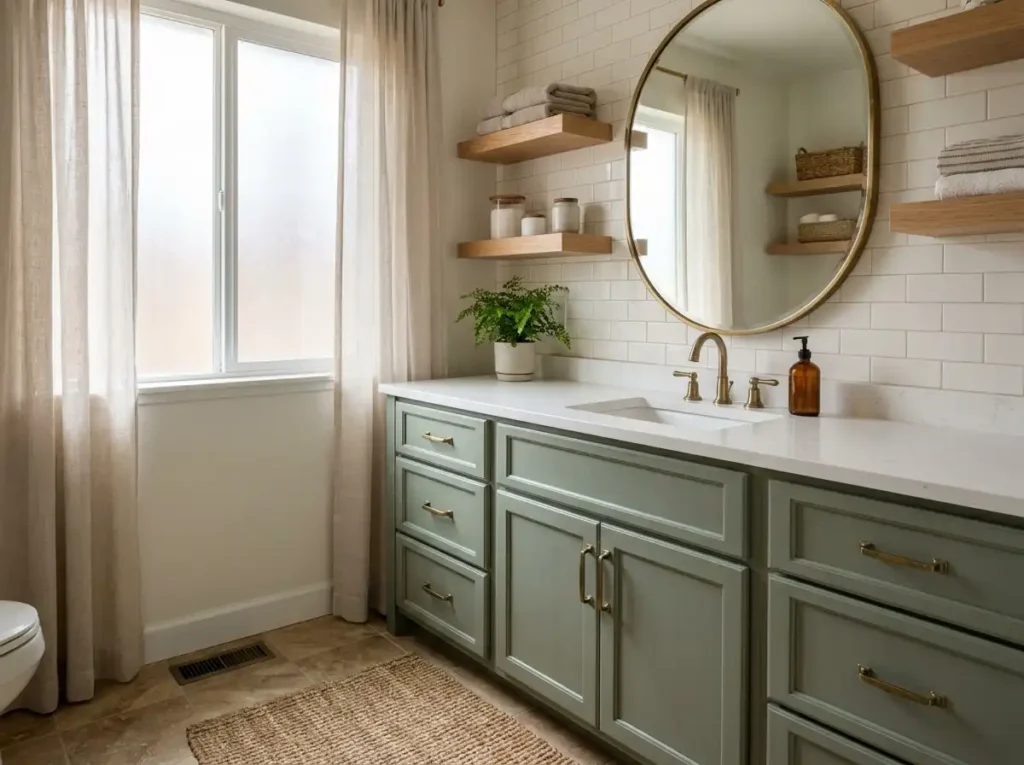
Bathrooms are ideal places to experiment with color because a vanity covers less area than a full kitchen.
Good options include:
- Sage
- Olive
- Dusty blue
- Navy
- Terracotta
- Mushroom
- Charcoal
- Warm white
A darker vanity can anchor a bathroom with white tile and light counters. A lighter vanity can make a small or windowless bathroom feel more open.
Use a durable satin or semi-gloss finish to improve moisture resistance and cleanability.
Best Laundry Room Cabinet Colors
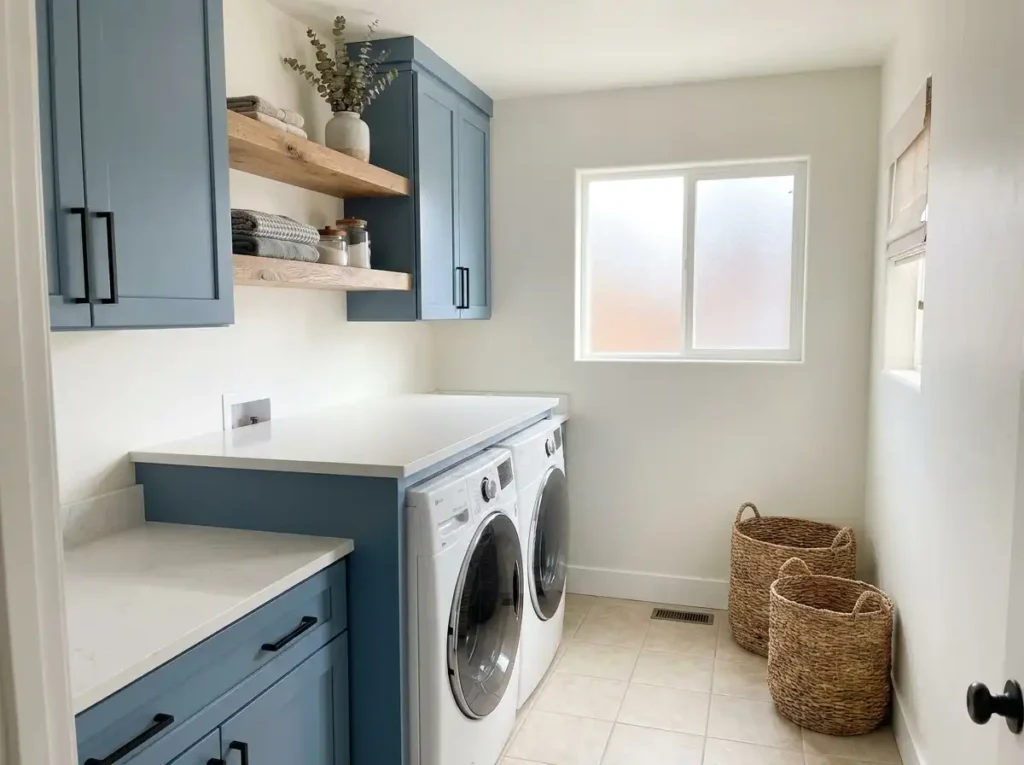
Laundry rooms provide an opportunity to introduce color with less risk. For a small interior laundry room, lighter cabinets can help reflect artificial light. For a laundry room with large windows, medium green, blue, or charcoal cabinetry can create more depth.
Good options include:
- Warm white
- Pale sage
- Dusty blue
- Mushroom
- Muted teal
- Charcoal
- Soft black
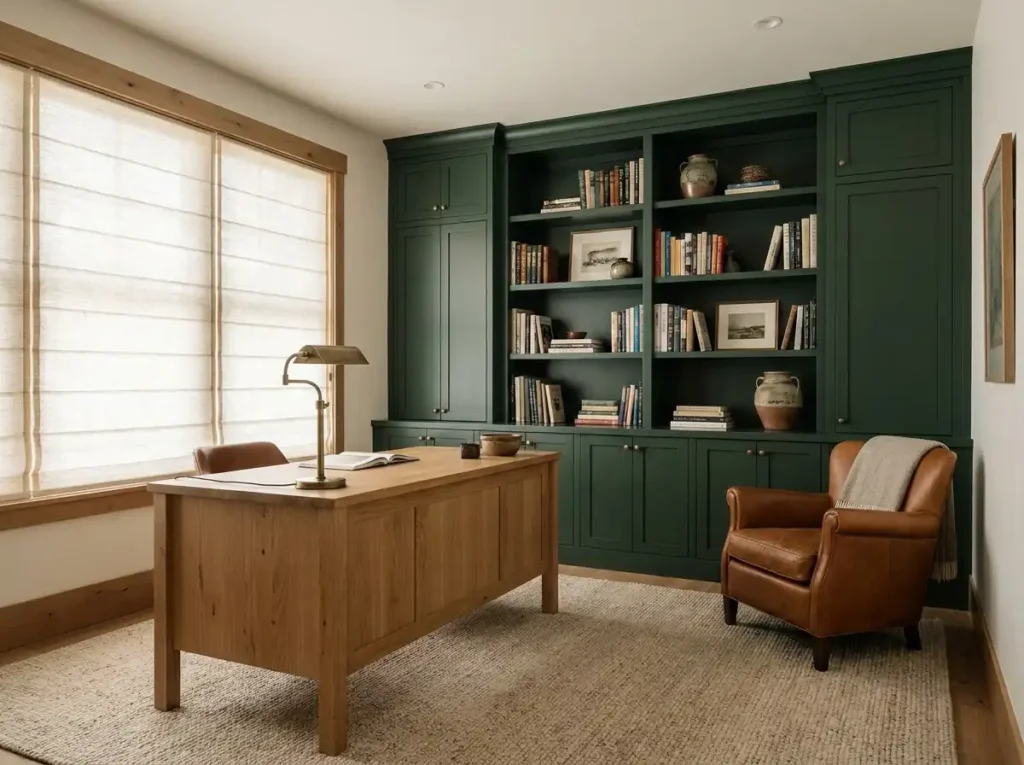
Best Home Office and Built-In Colors
Home offices and living room built-ins can support deeper colors than many kitchens and bathrooms.
For a library-inspired appearance, paint the shelves, cabinet backs, trim, and surrounding wall in the same color. For more contrast, place deep green, navy, or charcoal built-ins against warm white or cream walls.
Good Options Include:
- Deep olive
- Forest green
- Navy
- Slate blue
- Charcoal
- Mushroom
- Warm taupe
- Cream
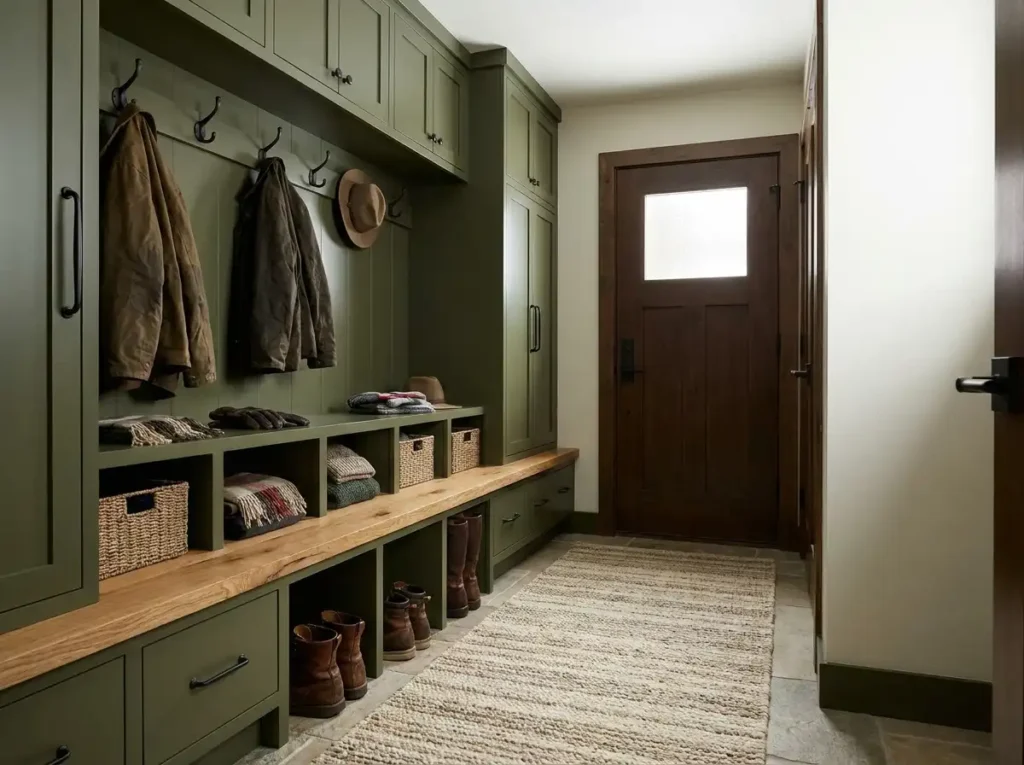
Best Mudroom and Entry Cabinet Colors
Colorado mudrooms and entryways must handle shoes, snow, mud, coats, bags, sports equipment, and pets.
Practical colors include mushroom, olive, charcoal, navy, warm greige, and brown-black.
Medium and dark colors can conceal some everyday marks better than white, although they may show dust and pet hair.
Use a durable satin or semi-gloss finish that can withstand regular cleaning.
Choosing Cabinet Sheen
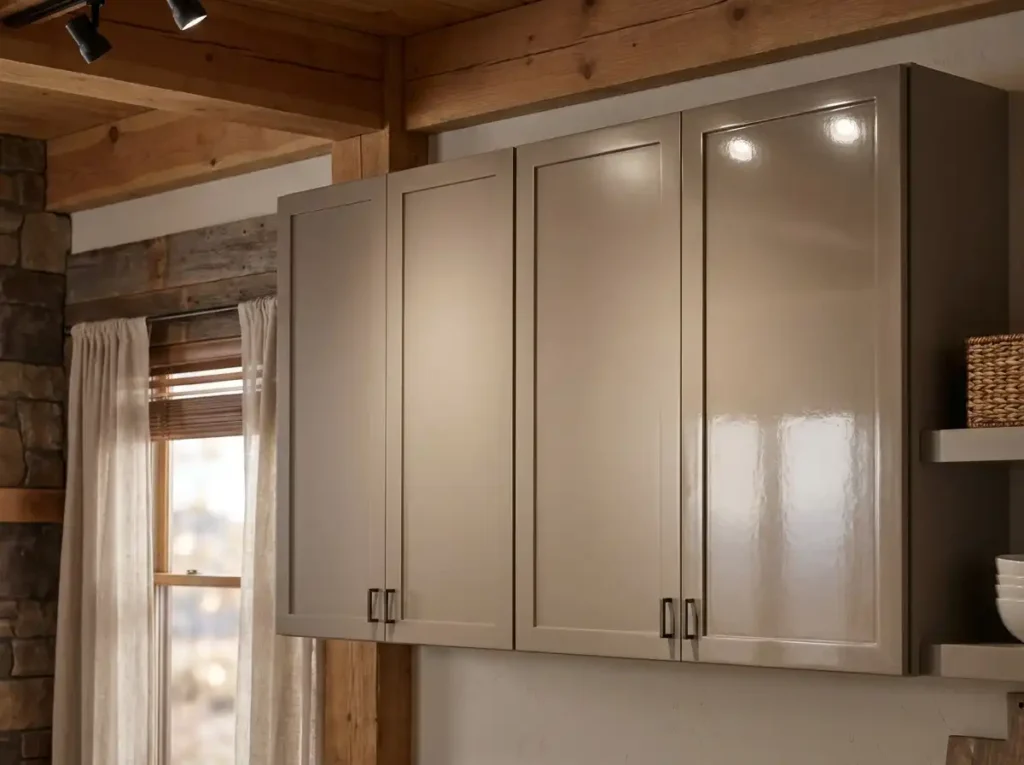
Cabinets need a finish that can withstand fingerprints, moisture, food splatters, and regular cleaning.
Satin
Satin provides a smooth appearance without excessive shine. It is a strong choice for kitchens, bathrooms, offices, built-ins, and laundry rooms.
Semi-Gloss
Semi-gloss provides greater reflectivity and washability. It can be useful for heavily used kitchens, bathroom vanities, mudrooms, and entry cabinets.
High-Gloss
High-gloss creates a modern, reflective finish but reveals dents, wood grain, sanding marks, and other imperfections. Thorough surface preparation is essential for high-gloss cabinets.
Matte and Flat
Matte finishes can look attractive but are generally less practical for high-use cabinetry. They are more difficult to clean and may show oils or marks around handles.
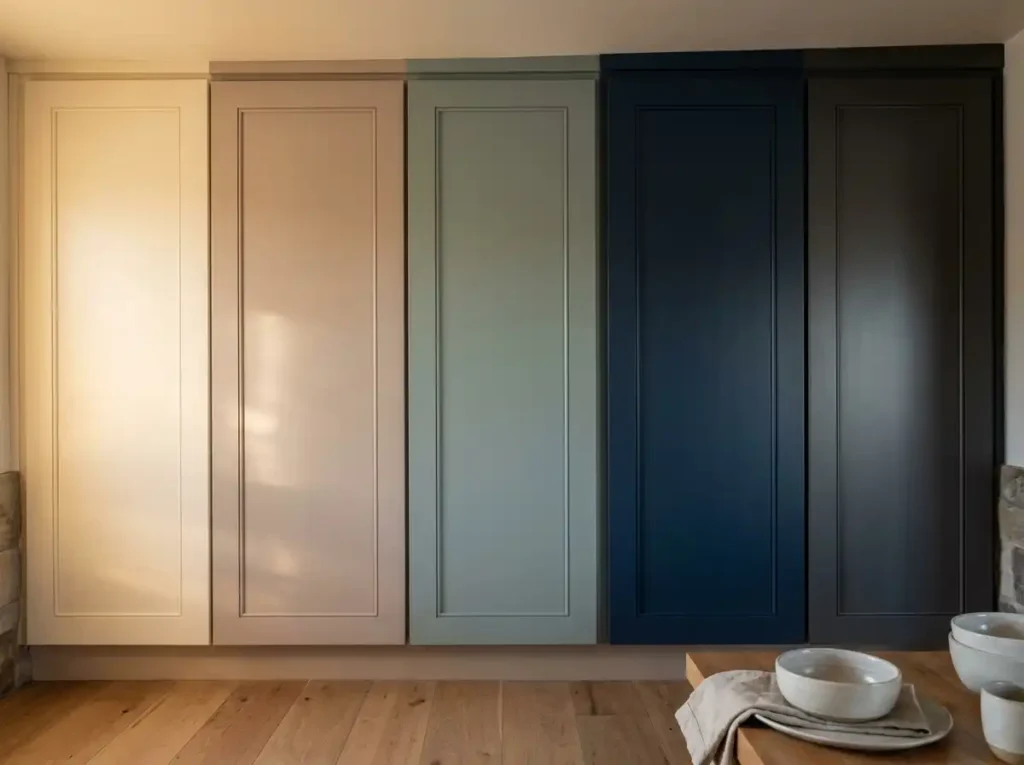
Consider the Color’s LRV
Light reflectance value, commonly called LRV, measures how much light a color reflects. Higher-LRV colors reflect more light and usually feel brighter. Lower-LRV colors absorb more light and appear deeper.
LRV is particularly important in Colorado because bright daytime conditions can make medium colors appear lighter, while evening conditions can make the same colors look substantially darker.
A dark navy or charcoal may work well in a bright kitchen but feel too heavy in a small interior bathroom.
Do not rely on LRV alone. Undertones, gloss level, window direction, and surrounding materials will also affect the final appearance.
Always Test Cabinet Colors in the Room
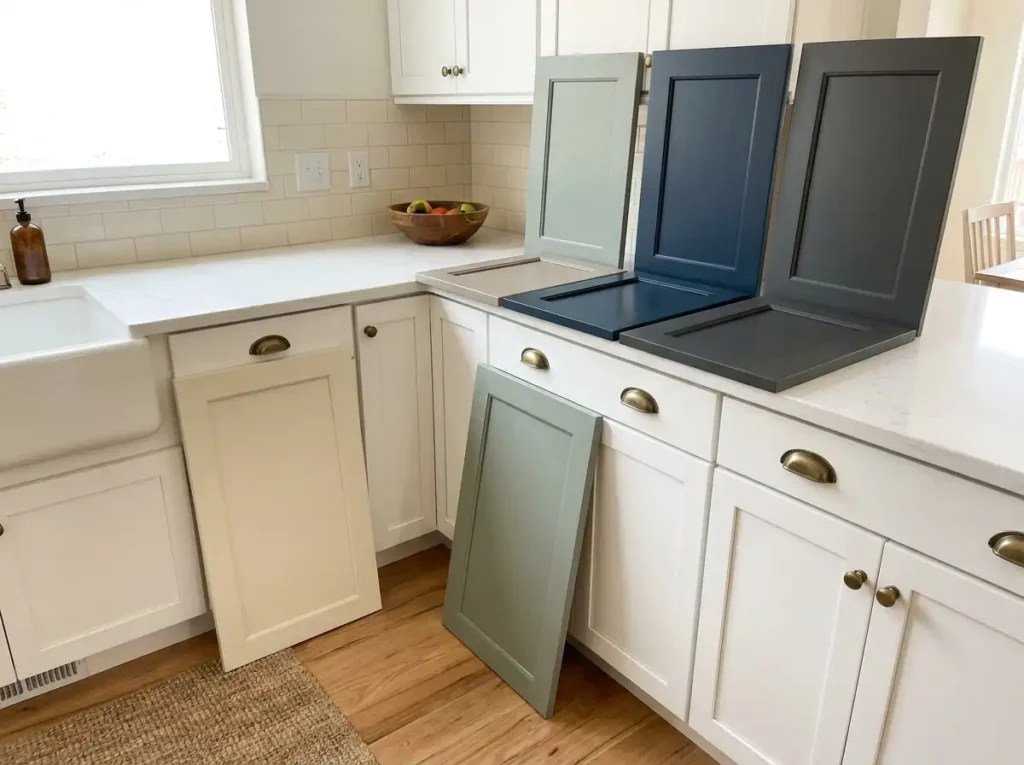
Small paper swatches are not enough for cabinet selection. Create large painted sample boards and place them beside:
- Countertops
- Backsplash
- Flooring
- Wall paint
- Trim
- Appliances
- Natural wood
- Tile
- Stone
- Hardware
Move the samples around the room and review them during the morning, afternoon, evening, and after dark.
“The best cabinet color is not always the one that stands out most on a sample strip,” Matt explains. “It is the one that works with the flooring, counters, walls, hardware, and light throughout the entire day.”
The goal is not to find a color that looks perfect under one lighting condition. The color should remain attractive as the light changes.
Cabinet Preparation Is Just as Important as Color
A well-selected cabinet color will not produce a durable result without proper preparation.
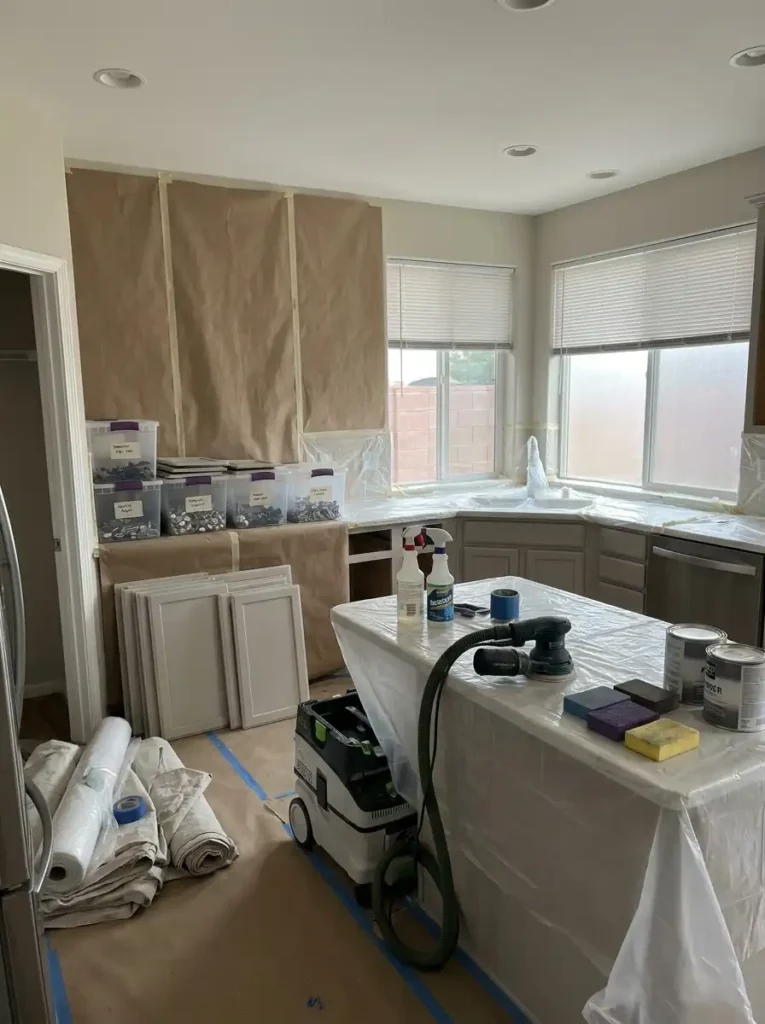
Cabinet Preparation Should Include:
- Removing doors, drawers, and hardware
- Labeling cabinet components
- Cleaning grease and residue
- Deglossing the existing finish
- Sanding surfaces
- Repairing dents and damage
- Filling unwanted hardware holes
- Applying a bonding primer
- Sanding between coats
- Spraying or carefully applying the finish
- Allowing the coating to cure properly
According to Matt, preparation is one of the biggest factors separating a lasting cabinet finish from one that begins failing prematurely. “Most cabinet paint failures are not caused by the color or the finish coat,” he says. “They happen because the cabinets were not cleaned, sanded, primed, and allowed to cure correctly.”
Skipping these steps can lead to peeling, chipping, visible brush marks, poor adhesion, and premature wear.
Professional Cabinet Painting in Northern Colorado
A professional cabinet finish should look smooth, withstand daily use, and complement the colors and materials throughout your home. MGM Painting Co. proudly serves Fort Collins, Loveland, Windsor, Timnath, Greeley, Wellington, and Johnstown with professional cabinet and interior painting services.
MGM Painting Co. provides professional painting services backed by detailed preparation, quality craftsmanship, clear communication, a 5-star Google rating, and A+ accreditation with the Better Business Bureau (BBB). Qualifying projects also receive a complimentary professional color consultation to help coordinate cabinet colors with countertops, flooring, walls, hardware, and other finishes.
Contact us today to schedule your estimate and give your kitchen cabinets, bathroom vanities, built-ins, or storage cabinets a durable new finish.


FAQs on Cabinet Paint Colors
Warm, nature-inspired colors are leading cabinet trends for 2026 and 2027. Popular choices include mushroom taupe, warm greige, cream, sage green, olive, dusty blue, navy, muted terracotta, charcoal, and brown-black. These colors provide more warmth and depth than the cool grays that were common in previous years.
Warm whites, mushroom neutrals, sage, olive, dusty blue, navy, and charcoal all work well in Colorado homes. The best choice depends on the room’s natural light, window direction, flooring, countertops, backsplash, and surrounding finishes. Colorado’s strong sunlight can make undertones appear more noticeable, so testing colors inside the home is important.
Bright Colorado sunlight can make cabinet colors appear lighter, warmer, or more saturated during the day. North-facing rooms often make colors look cooler, while south- and west-facing rooms can make warm colors look more golden. Dark navy or charcoal cabinets may look clearly colored during the day but almost black after sunset.
Warm white, cream, light mushroom, pale taupe, and soft sage can help a small kitchen feel brighter and more open. Pairing lighter cabinets with pale countertops and a simple backsplash can reflect more light throughout the room. Dark colors can still be used selectively on an island or lower cabinet section.
White cabinets remain popular, but homeowners are moving toward softer and warmer whites. Cream, ivory, and warm off-white colors tend to look more inviting than stark blue-white shades. These warmer whites also coordinate well with natural wood, beige quartz, brass hardware, and stone.
Warm cream, mushroom, taupe, sage, and muted olive generally coordinate well with honey oak flooring. These colors work with the natural warmth of the wood instead of creating a harsh contrast. Icy gray and blue-white cabinets can make honey oak appear more orange.
White quartz can work with warm white, mushroom, sage, olive, navy, terracotta, or charcoal cabinets. The quartz undertone should guide the final choice. Some white quartz surfaces lean warm, while others contain cool gray or blue undertones. Place a large cabinet color sample directly beside the countertop before deciding.
Satin and semi-gloss are both practical choices for kitchen cabinets. Satin provides a smooth finish with moderate shine, while semi-gloss offers greater reflectivity and washability. Matte finishes are generally less practical in kitchens because they can be harder to clean around handles and cooking areas.
Dark navy, charcoal, deep green, and black cabinets can show dust, fingerprints, pet hair, and water spots more easily than medium-toned colors. A durable satin or semi-gloss finish makes routine cleaning easier. Proper surface preparation also helps create a smoother finish that is easier to maintain.
Cabinet colors do not need to match the walls, but the undertones should coordinate. Warm mushroom cabinets can pair with cream or warm white walls, while sage and navy often look balanced against softer neutrals. A tonal design can also work well by using slightly lighter or darker versions of the same color family.
Yes. Two-tone cabinetry remains a popular way to introduce contrast. Warm white, cream, mushroom, or taupe can be used on the perimeter cabinets, while sage, olive, navy, deep teal, or charcoal can define the island. The colors should share compatible undertones and coordinate with the flooring and countertops.
Paint large sample boards and place them beside the countertops, backsplash, flooring, walls, trim, appliances, and hardware. Review the samples in morning light, afternoon light, evening light, and under the room’s artificial lighting. Small paper swatches are usually not large enough to reveal undertones accurately.
Many wood cabinets can be professionally painted if they are structurally sound and properly prepared. The process may include cleaning, degreasing, sanding, repairing damage, applying a bonding primer, and spraying or carefully applying the finish. Cabinets with severe damage or failing materials may require repair or replacement before painting.
Cabinet paint may feel dry relatively quickly, but full curing takes longer. The exact timeline depends on the coating, temperature, humidity, ventilation, and application method. Homeowners should follow the painter’s care instructions and avoid aggressive cleaning or heavy use until the finish has adequately cured.
Yes. Qualifying MGM Painting Co. projects include a complimentary professional color consultation. Homeowners can work one-on-one with June to compare cabinet colors, evaluate undertones, and coordinate the new finish with countertops, walls, flooring, trim, backsplash, and hardware.